In autumn every Saturday is taken, and families ask for dates a year ahead. Then winter arrives and half the calendar is empty, while weekdays sit empty almost all year. Rent, payroll and utilities stay the same every month. Does your venue follow the same pattern?
Here, wedding venue marketing does not mean more posts or a bigger ad budget. It is a system: see the empty dates, build an offer for each of them and move every enquiry to a paid deposit. This guide covers seasons, the booking calendar, the venue tour script, partner referrals and the numbers to track. It is written for local owners and for foreign operators or investors looking at the banquet business in Uzbekistan.
The system rests on the principles of a marketing system for business. One difference matters: a wedding hall, or to'yxona, sells dates. An unsold Saturday never comes back.
Wedding venue marketing starts with the calendar
Many owners switch on ads "when bookings slow down". But families decide months in advance, so a January date is sold in October or November, and late ads mostly bring cheap last-minute enquiries.
Start with the booking log for the past two years. For each month, record three numbers: weekend days booked, weekdays booked and average revenue per event. This table shows the wedding season in Uzbekistan for your city more accurately than any general statistic. If you are assessing a venue to acquire, ask the seller for exactly this log.
Then split the year into three parts:
- Peak season. Advertising is hardly needed. The task is to close the best dates with deposits quickly and hold your price.
- Shoulder months. Ads and partners work actively, and package offers are ready in advance.
- Quiet months. Other event formats and a separate weekday offer.
Add public holidays, graduation parties and year-end corporate events to the same table. How to plan all dates of the year is covered in the seasonal marketing calendar guide.
The venue booking calendar as a marketing tool
A booking calendar is one shared schedule: which date belongs to whom, who is waiting and which dates are secured by a deposit. It serves sales as much as bookkeeping.
First, it tells the sales manager what to sell: a weekly list of empty dates goes to partners and waiting clients.
Second, deposit discipline stops dates from "freezing". A verbal booking should not hold a date indefinitely: hold it for 2–3 days and release it if no deposit arrives. State this rule in the first conversation.
Third, keep a waiting list for popular dates. When a family moves its wedding, offer the freed date to the first family on the list straight away.
Who to sell the empty days to
A wedding is a large evening event, but families need a hall for more than weddings. Many other occasions are smaller, can happen on a weekday and are planned at short notice.
Also read Quiz Landing Page: Leads That Arrive With Answers, Not Just "How Much Is It?"- Beshik to'y (cradle feast), sunnat to'y (circumcision feast) — Who decides: Parents, grandparents; How far ahead: 1–3 months; What to offer: Small hall, family menu
- Jubilee, birthday — Who decides: Adult children; How far ahead: 2–6 weeks; What to offer: Weekday lunch package
- Nikoh evening, engagement — Who decides: Both families; How far ahead: 1–2 months; What to offer: Short programme, fewer guests
- Corporate party, graduation — Who decides: Company, parents' committee; How far ahead: 1–2 months; What to offer: Clear per-guest price, invoice
Each format needs its own page, its own post and its own price. A single "hall for any event" ad speaks to nobody in particular.
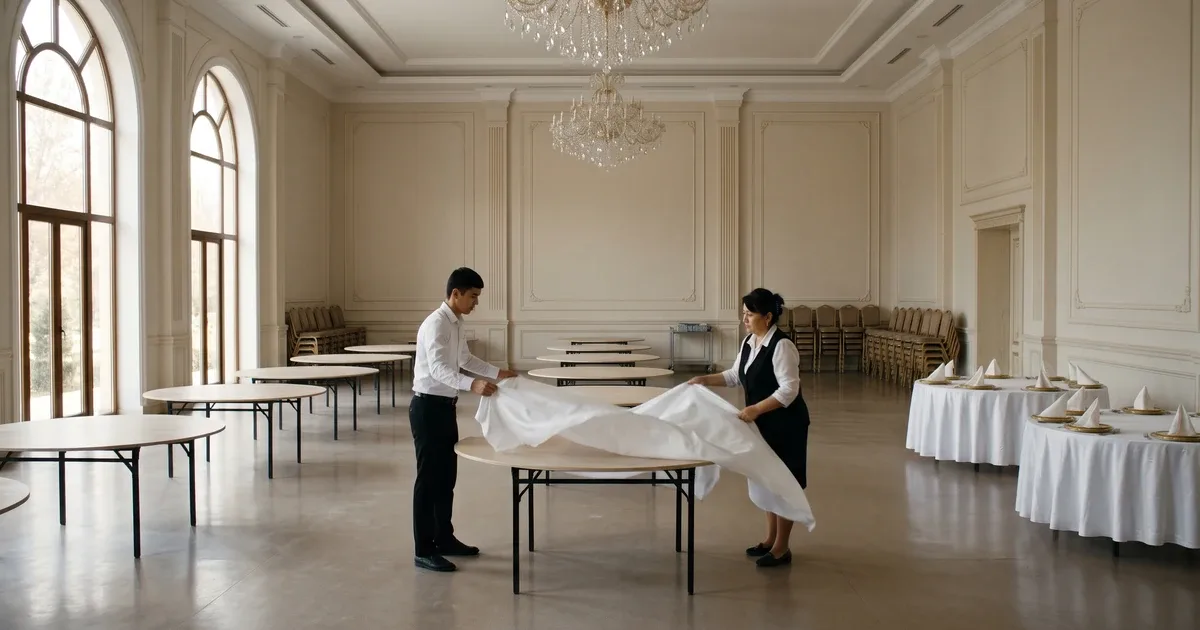
If the main hall can be divided, show it: a family party for 40 feels lost in a 400-seat room but cosy behind a curtain or partition.
Build a separate weekday package. Show added value rather than a low price: free décor, extended hours, a tea and sweets table for guests. Your peak-season pricing stays intact.
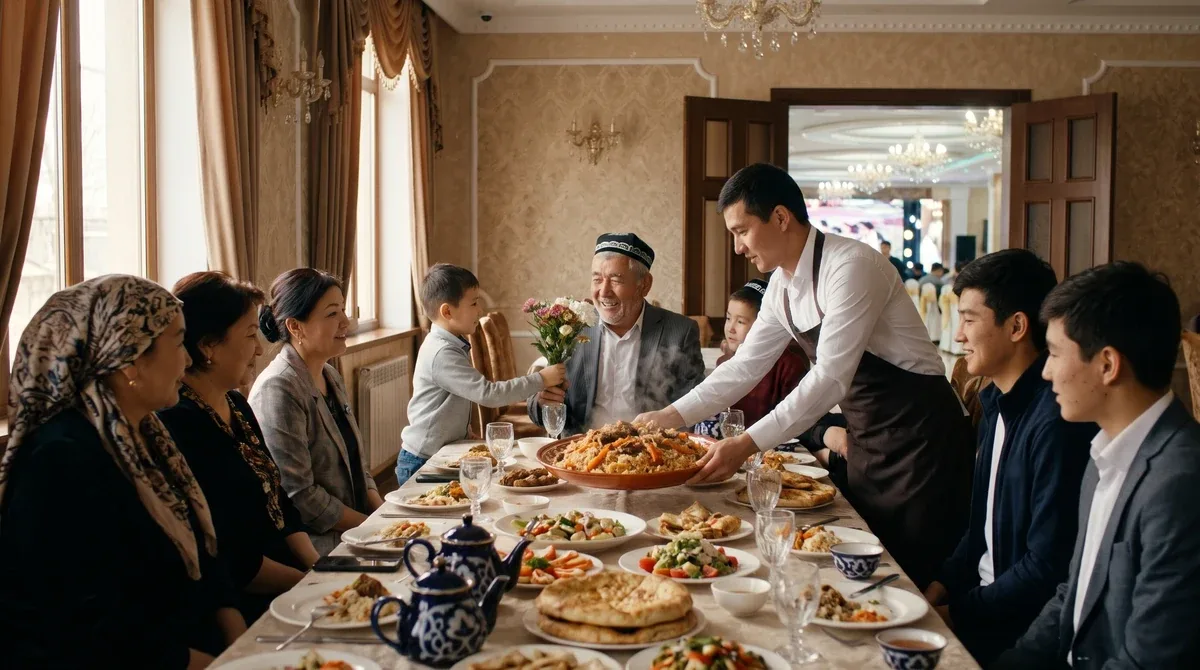
Showing the price and replying fast
The first question a venue gets is almost always "How much is it?" An enquiry answered with "come over and we'll tell you" is often lost, because families usually message several halls at once.
The easiest way to show the price openly is packages:
- Price per guest. Menu, service and hall are included. A family multiplies by the guest count and sees an estimate immediately.
- Two or three packages. For example, "family", "standard" and "full", each with a clear list of what is included and what costs extra.
- Add-ons. Décor, music, traditional karnay-surnay musicians, photo and video on a separate line.
A "from" price is enough: the client knows the rough figure from the first message, and enquiries with a very different budget filter themselves out.
Response speed matters as much as price. During working hours, one named person should own Instagram Direct, Telegram and phone calls. Keep a reply template ready: greeting, whether the date is free, packages and an invitation to visit. If the date is taken, offer the nearest free dates at once. For foreign-owned venues, make sure this person replies in Uzbek and Russian.
Log every enquiry in a table: name, phone, requested date, guest count and source.
The venue tour: visit script and tasting
Families do not choose a wedding hall without seeing it in person. That makes the venue tour, the family's visit to inspect the hall, the central step of the sale. Many deposits are won or lost here.
A simple script:
- Agree the time in advance. The manager is on site, the hall is clean and lit.
- Ask first, show second. Date, guest count, which families take part, who makes the final call. Often a parent decides, so invite them too.
- Show the hall through a guest's eyes. Entrance, parking, the couple's table, dance floor, preparation room.
- Show real wedding photos. This exact hall, full of guests, with different décor.
- Offer a tasting. Trying three or four dishes from the menu often speeds up the decision.
- Close with a next step. A 2–3 day hold on the date and the deposit deadline.
Hypothetical example. At a 350-seat hall in a regional centre, the manager used to simply walk families around. Price came up at the end, and families left saying "we'll think about it". Then the order changed: questions first, tasting in the middle, a ready quote and deposit deadline at the end. In this hypothetical case, "we'll think about it" became less common, because the family got every answer inside the hall.
Within 24 hours, send the quote, the agreed date and the hold deadline. If there is no reply, remind them once a day before the hold expires.

Instagram, Reels and maps for a banquet hall
A family choosing a venue looks at Instagram first: what does the hall look like when full, and does it fit the budget?
Content formats that work:
- Real weddings. Only with the client's written consent. Choose shots with many guests' faces carefully.
- One hall, different décor. The same room in different colours and styles, so families can picture their own day.
- Kitchen and food. How the dastarkhan (the laid festive table) is filled, how hot dishes are served.
- Smaller events. Jubilees, cradle feasts, corporate parties: posts that sell the empty days.
- Practical details. Address, parking, capacity, packages and free dates.
Short videos show size and atmosphere better than photos. Formulas are in the guide to Instagram Reels scripts for business.
Do not forget maps. Guests often find their way to a wedding by map, and new clients search for halls on Google Maps, Yandex Maps or 2GIS too. The listing should have an exact address, entrance, phone, opening hours and real photos of the hall.
Banquet hall marketing through referral partners
In the wedding market, many clients arrive by recommendation. Wedding planners, decorators, photographers, hosts and musicians meet new families every week.
To work with venue referral partners:
- Make a list. Decorators, photographers, hosts and planners who have already worked in your hall.
- Put the terms in writing. What the referral reward is and when it is paid. Pay only after the deposit: it is fair and easy to understand.
- Give them materials. Good photos of the hall, packages, the list of free dates.
- Send free dates every month. When a partner can name a specific date, enquiries come faster.
For past clients, a simple referral mechanic works: a gift at the family's next celebration if they bring in friends. The details are in the referral program guide.
Reviews are referrals too. Google Maps policy prohibits rewarding reviews with money, discounts or free services. Selectively asking only happy clients is also prohibited. A few days after the event, send every client a thank-you note with a review link. Reply to every review, especially negative ones, calmly and specifically.
Enquiry, tour, deposit: the numbers to track
The result of wedding venue marketing is not likes but dates secured with a deposit. Record at least four numbers every month:
- Enquiries, split by channel.
- Venue tours: families who visited.
- Deposits: dates secured with money.
- Empty dates, especially weekends.
These give you two conversion rates. A conversion rate is the share of people who move from one stage to the next.
Hypothetical calculation (made-up numbers): in one month, 60 enquiries came in, 18 families toured the hall and 7 paid a deposit. Enquiry to tour is 30%, tour to deposit is about 39%. If enquiries are high but few families visit, check reply speed and how the price is shown. If many visit but few pay, look at the visit script, the tasting or the packages.
Compare channels with the same numbers. If Instagram brought 40 enquiries and 2 deposits, while a decorator brought 5 enquiries and 3 deposits, the more valuable channel is obvious. For investors, this funnel is also a fast way to judge whether a venue's revenue depends on the owner's personal network or on a repeatable process.
How to run bookings, deposits and menu costing in software is explained in the guide to software for a wedding and banquet hall.
Conclusion
Wedding venue marketing has three parts: a calendar built on past data, with empty dates spotted early and deposit discipline; an offer of per-guest packages and separate formats for empty days; and a sale built on fast replies, a planned venue tour with tasting, and partner referrals. The enquiry-to-deposit numbers show what works.
Your first step is simple: list the free dates for the next three months. Next to each one, note which event format and which partner could fill it.
Frequently asked questions
Which channel should wedding venue marketing start with?
Start by fixing what already brings enquiries: the map listing, prices and packages on the Instagram profile, and fast replies. Then build referrals from past clients and partners. Paid ads make sense once you have a specific offer, especially for quiet months and weekdays.
Should a venue publish prices on Instagram?
An exact total is not necessary, but a "from ... per guest" price usually is. It filters out families whose budget does not fit, so your sales manager spends time on real prospects. The full package details are best explained during the venue tour.
Should we discount in the off-season?
Before discounting, test a different offer: a smaller hall, a shorter menu, a weekday package or an extra service included. Deep discounts teach peak-season clients to bargain too. If you do discount, limit it to specific dates and a deadline.
Can we give clients a gift for leaving a review?
Google Maps policy prohibits rewarding reviews with money, discounts or free services. It also prohibits selectively asking only happy clients. Ask every client after the event, with no incentive, and reply to every review.
Want a second look at your venue's calendar?
We will review your empty dates, packages, venue tours and partner referrals, and help find the stage between enquiry and deposit where clients drop off. Free consultation.