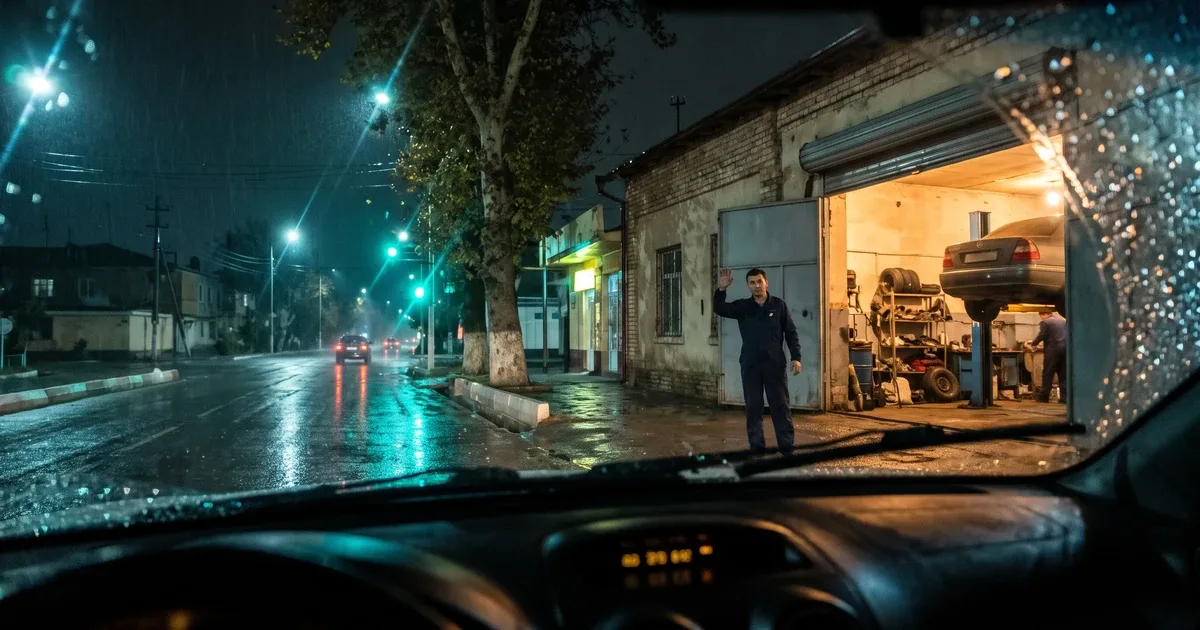
Picture a well-equipped service centre in Tashkent. Trained mechanics, new lifts, a brand that is respected abroad. Yet on some days the bays sit empty, while a small garage across the road has a queue. The difference is usually not the mechanics. A driver whose car starts rattling opens a map app, types "avtoservis" and calls the nearest place with the most reviews.
This article is for foreign companies, franchisors and investors bringing a car service, tyre or service-centre format to Uzbekistan. It covers where customers really come from, how map listings and reviews work, how trust is built locally, how to bring customers back and how to see which channel produced each call.
The general logic is the same as any marketing system for business. In car service, two things decide almost everything: proximity and trust.
How drivers in Uzbekistan find a car service
Customers reach a car service through a handful of channels, each with its own role:
- Yandex Maps, Google Maps, 2GIS — When it works: A problem exists now, nearby help is needed; What matters: Complete listing, reviews, phone
- Word of mouth — When it works: The driver distrusts new places; What matters: A good experience every visit
- Instagram — When it works: Showing the work, building trust; What matters: Real videos of the process
- Telegram — When it works: Ongoing contact and reminders; What matters: Booking and notifications
- OLX — When it works: Someone searches for a specific job; What matters: Ad with the service and a price range
The local mix differs from many Western markets. Telegram is a mainstream messaging and channel app, not a niche tool. OLX is a common place to look for services. Several map apps are used in parallel, so a listing on only one of them misses part of the market.
Decisions are fast. A warning light comes on, the brakes squeal, the air conditioning stops cooling, and the driver wants to come today or tomorrow. At that moment they open a map, not a brand page. So the first budget should go into listings.
Word of mouth is powerful but cannot be bought. It comes from the experience of each visit. When a customer tells a neighbour "they don't cheat you there", that is the cheapest advertising available.
Paid advertising, such as targeted Instagram ads, pays off once this groundwork is in place. A driver who sees an ad will still open the map and read the reviews. If the listing is neglected and reviews are few, ad spend does not turn into calls.
Map listings: the shop window of a car service
Many local car services opened their listing once, years ago, and never touched it again. An old phone number, one blurry photo, wrong hours. A driver sees that and scrolls on. For a newcomer, this is an easy place to stand out.
Also read Someone Taps Your Ad and Lands on Your Instagram Profile. What Should They See First?Check each listing against this list:
- Name and category. The name as on the sign; a precise category such as car service, tyre fitting or car wash. One primary category, others as secondary.
- Address and entrance. The pin should sit on the gate. If you are inside a courtyard, add a photo showing how to drive in.
- Hours. Include public holidays and lunch breaks.
- Phone and messenger. A number someone actually answers, in Uzbek and Russian.
- Services. Not "repairs", but specifics: oil change, suspension, diagnostics, air conditioning, gas (CNG/LPG) equipment.
- Photos. The gate, the work area, reception, mechanics at work. Stock images do not build trust.
The step-by-step process for listings and map rankings is covered in local SEO on Google Maps, Yandex Maps and 2GIS.
Reviews: ask, reply and never stay silent
In reviews, drivers look past the stars for answers to their fears. Was the price inflated? Was the car ready on time? Were extra jobs added? How recently has anyone on your team read the latest reviews of each location?
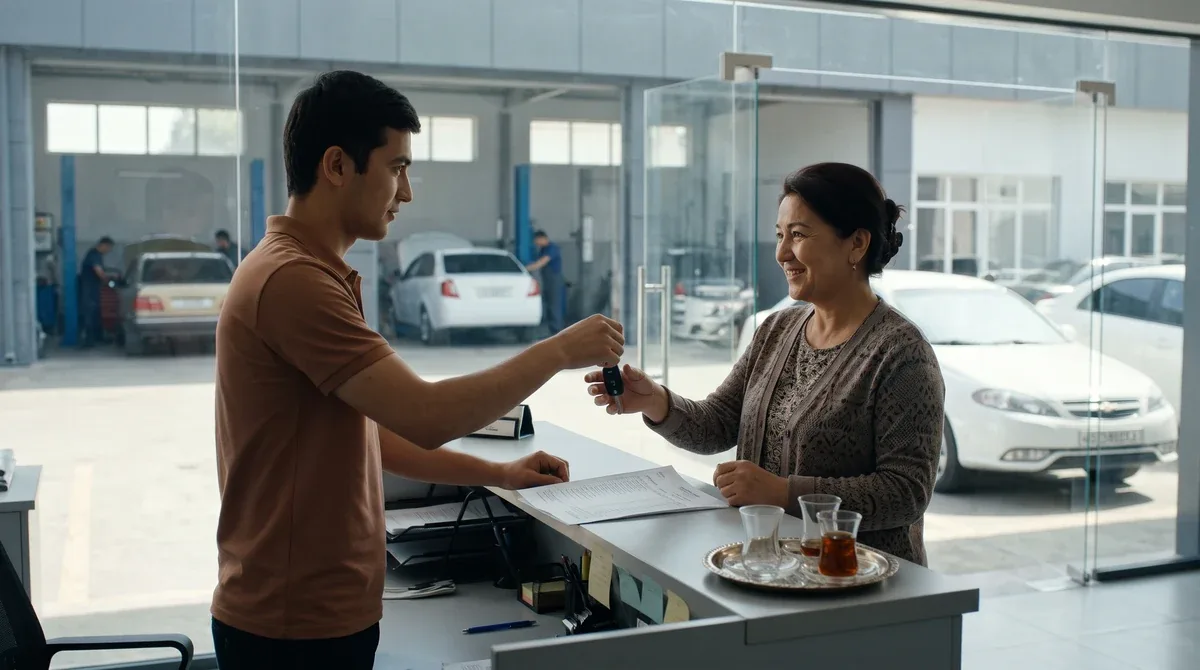
Collecting reviews needs no complex system. When handing back the keys, the advisor says one sentence: "If you liked the work, a few words on the map would help us a lot." A QR code sits on the counter, and a link goes out in the follow-up message.
There is one firm rule. Google's user-contributed content policy prohibits offering discounts, gifts or other rewards for reviews. A promotion like "five stars and your next oil change is free" can harm the listing. Global franchise playbooks that rely on review incentives need adjusting.
Reply to negative reviews; do not stay silent. Keep it short, calm and specific: show you understood the problem and offer a way to fix it. The next hundred readers will see that reply more than the person who complained. Steps for handling negative feedback are in online reputation management.
Trust: upfront prices and showing the old part
One fear stops drivers more than any other: "what if they cheat me". A driver who does not understand cars has to take the mechanic's word. That is why, in this market, trust often works harder than advertising. It is also where an international brand's standards can become a real advantage, if they are visible.
Simple habits that build trust:
- A price range by phone. You cannot quote an exact sum without inspecting the car, but you can give a range: labour costs this, parts vary by model.
- A written estimate. After diagnostics, the customer gets a list of jobs and parts on paper or by message.
- Extra work only with approval. If a new fault appears, the mechanic calls, sends a photo and asks permission.
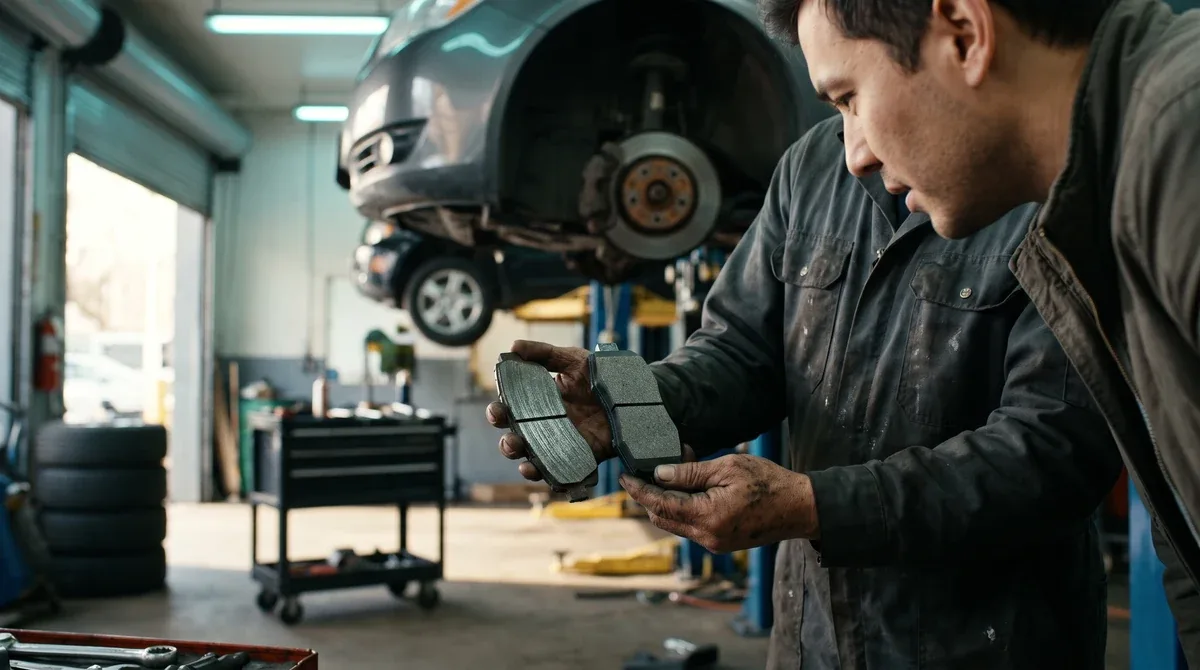
- Returning the old part. Replaced brake pads, filters or bearings are shown to the customer. This answers "did they really replace it?"
- A written warranty. State in advance which jobs are covered and for how many days or kilometres.
A hypothetical case: a customer comes in for an oil change. On the lift, the mechanic sees the front pads are almost gone. Option one is to replace them quietly and add them to the bill. Option two is to invite the customer into the bay, show the pad, name the price and ask: "Today, or next visit?" In the first case the customer feels uneasy at the bill. In the second, they leave trusting the service and come back.
Instagram, Telegram and OLX: different jobs for different channels
Instagram is where a car service shows its work. Glossy car photos are not enough; people want to see whether you know what you are doing. Short videos work well: how diagnostics are done, how a worn part differs from a new one, how to prepare a car for winter. Cover customers' number plates. A phone camera is enough; what matters is real work on screen, not staged shots.
Telegram suits ongoing contact with regular customers. A channel or bot can handle booking, "your car is ready" messages and seasonal reminders. Many drivers prefer writing to calling.
OLX reaches people searching for a specific job, such as tyre fitting, gas equipment installation or air-conditioning recharge. The ad needs the service, a price range, the address and real photos. A separate phone number per channel makes it easier to see where calls come from.
Repeat visits: oil, tyres and seasons
The most valuable asset of a car service is its existing customer base. Cars need regular maintenance: oil, filters, brake fluid, seasonal tyre changes. Bringing back an existing customer costs less than finding a new one.
At every visit, record three things:
- The customer's name and phone number.
- The car model and odometer reading.
- The work done and the approximate date or mileage of the next service.
Then reminders do the work. When an oil change is due, send a short message: "Hello, Jasur. Your Malibu is due for an oil change. Which day this week suits you?" Personal, short, with a clear offer. Send it in the language the customer used at reception.
Seasons give a ready reason. In autumn, winter tyres, battery and antifreeze checks. In spring, summer tyres and air conditioning. Send these a week or two before the season starts so people can book without queuing.
When job cards, vehicle history and reminders outgrow paper or spreadsheets, the internal side is covered in ERP for a car service.
How to know which channel produced a call
Most car service customers call. If nobody records where a call came from, nobody knows which channel deserves the budget. Marketing then gets switched on and off by gut feeling.
The simplest method: the advisor asks every new customer "how did you find us?" and logs it. The next step is a separate phone number per channel: one on the map listing, another on Instagram, a third on OLX. Calls then sort themselves. This is called call tracking. How to set it up is explained in call tracking analytics.
A weekly control table can be this simple:
- New calls and their source — What it shows: Which channel works
- Missed calls — What it shows: Whether customers are lost on the phone
- Calls that became visits — What it shows: How well the advisor handles calls
- New reviews and average rating — What it shows: Whether trust is growing
- Customers returning after reminders — What it shows: Whether the base brings revenue
Summary
Car service marketing in Uzbekistan starts with maps: complete listings on Yandex, Google and 2GIS, real photos and a phone that is answered in Uzbek and Russian. Ask for reviews consistently, never pay for them, and reply calmly to criticism. Quote a price range upfront, give written estimates and show the old part. Record mileage and the next service date at every visit, and send reminders on time. Log the source of every call. Then you can see where the marketing budget goes, and customers come back for years rather than once.
Frequently asked questions
Which map platforms matter most for a car service in Uzbekistan?
Run complete listings on Yandex Maps, Google Maps and 2GIS at the same time. Drivers use different apps, and many switch between them. Keep the address, hours, services, photos and phone number identical everywhere.
Should prices be quoted before the car is inspected?
Quote a range, not a fixed sum: labour costs this much, parts vary by model. After diagnostics, give a written estimate and do extra work only with the customer's approval. This is the strongest trust signal in the local market.
What language should marketing be in?
Both Uzbek and Russian. Many urban drivers read Russian, while a large share of customers prefer Uzbek, especially outside Tashkent. Listings, reminders and the reception script should work in both.
Can a business offer discounts in exchange for reviews?
No. Google's user-contributed content policy prohibits discounts, gifts or other rewards for reviews. Ask customers directly after the job and give them a QR code or link.
Opening or growing a car service in Uzbekistan?
We can look together at your map listings, reviews, calls and repeat visits, and agree on the first steps for the local market.