

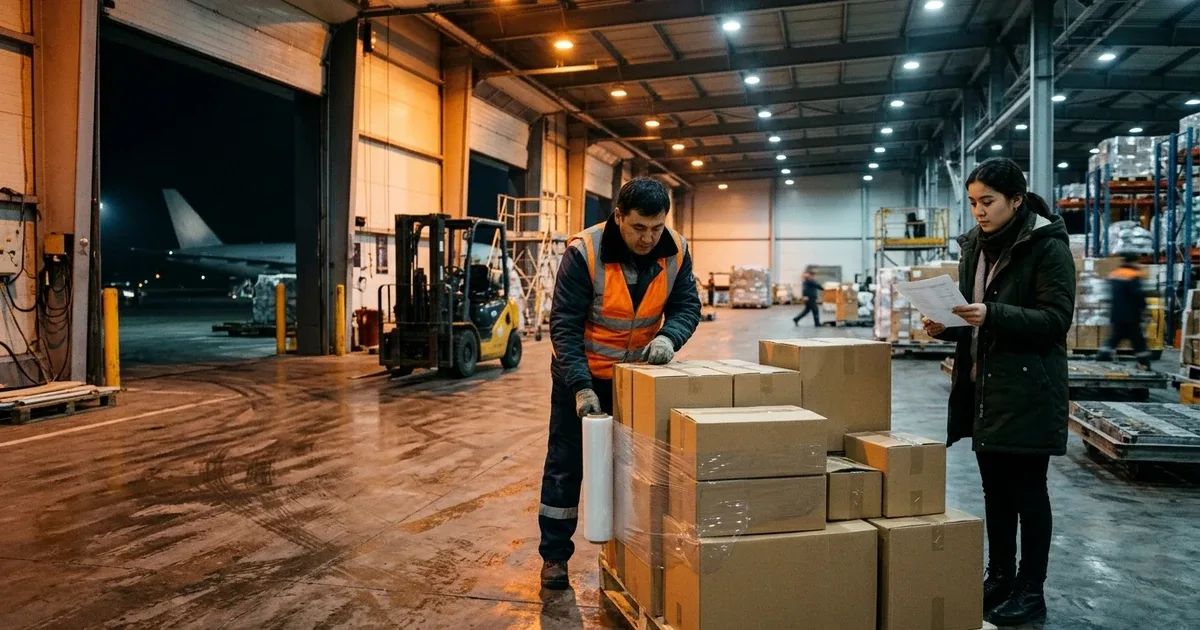
Information as of November 2026.
Say you have found a workshop in Margilan, and similar ikat cushion covers go for about USD 40 on Amazon. Or you are an Uzbek founder living abroad with a family orchard back home. The idea looks simple, until the questions start. Can the producer open an account from Uzbekistan? Who clears the goods into the US? Where do the payouts go, and how much is left per unit?
This guide takes them in order, from the account and the store to logistics, fees and a 90-day plan. It is part of the series on marketplace growth strategy.
The first question: whose name is on the account
To sell on Amazon you need Seller Central, the seller dashboard. Amazon keeps a list of countries accepted for seller registration in its help pages. In May 2021 it grew to 188 countries (Marketplace Pulse), and press reports at the time said Uzbekistan and its Central Asian neighbours were added. The list changes, though, and its current status could not be confirmed from public official pages.
So step one is simple: check the list and the drop-down menu yourself. Even where registration is allowed, the US store asks for (sell.amazon.com):
- a government ID and proof of residential address from the last 180 days, such as a bank statement;
- a credit card that can be charged internationally;
- a bank account, a business registration document and tax information;
- identity verification: a photo with your ID or a video call with an Amazon associate.
The bank is usually the hardest part. Amazon pays out only to accounts in the countries and currencies it supports. Payouts to a bank account in Uzbekistan could not be confirmed from public sources, so check this yourself before opening the account. If you receive funds through a payment service provider, it must be in Amazon's Payment Service Provider Program: since July 2021 Amazon has stopped paying out to providers outside it.
If the direct route is closed, there are legal alternatives:
- Account in the producer's name — Seller of record: The producer or its Uzbek company; Best for: The country is accepted and bank and card rules can be met
- Company abroad — Seller of record: Your company registered in the US or EU; Best for: Larger volumes, and you can handle local tax and reporting
- Distributor or brand partner — Seller of record: A foreign partner who buys from the producer; Best for: Producers who want to make goods, not run an Amazon store
For a foreign partner, the third route is often the cleanest. The Uzbek company sells to you under a standard export contract, and you are the seller on Amazon. In the second route, the Uzbek company also exports to the foreign company and must follow the rule on repatriating export proceeds. Renting someone else's account or registering through a nominee is not an option. It breaks Amazon's rules and the law, and ends in suspension.
Which Amazon store to start with
Each Amazon store is a separate market. An account opened through sell.amazon.com covers the US, Canada, Mexico and Brazil. Europe, the UK and the UAE (Amazon.ae) have their own registration and rules.
Also read A/B Testing Product Cards on Marketplaces: Prove Which Cover, Title and Price Sell Better Instead of Guessing- United States: the largest demand and the toughest competition. US duties and tariffs have changed often since 2025, so check each product code with a licensed customs broker before shipping.
- EU and UK: storing goods in a local warehouse usually means registering for VAT in that country. On the other hand, many Uzbek goods can enter the EU duty-free under GSP+. The conditions are in the guide to exporting from Uzbekistan.
- UAE: closer and cheaper to reach, but a smaller market.
Start with one store. Three at once means three tax setups, three supply chains and triple the mistakes.
FBA or FBM: who stores and ships
FBA (Fulfillment by Amazon) means your stock sits in an Amazon warehouse. Amazon picks, packs and delivers orders and handles returns and customer questions. FBM (Fulfilled by Merchant) means the stock stays with you or a partner, and you arrange delivery.
Single-parcel FBM from Uzbekistan rarely works: delivery is slow and costly, and buyers expect speed. In practice two options remain: FBA, or FBM from a partner's warehouse in the destination country.
Amazon and its fulfilment centres will not act as importer of record for FBA inventory (Seller Central help page "Import and export inventory"). The importer of record is the party legally responsible for the import, including paying duties. Someone must take that role at US customs: your company, a partner, or a broker offering that service.
The product's route: from Uzbek customs to an Amazon warehouse
The chain looks like this:
- Export clearance in Uzbekistan. The exporter is an Uzbek legal entity. The declaration is filed electronically, and with full documents customs clears it within one working day. Exports of goods are generally zero-rated for VAT. Export proceeds must be repatriated: settlement beyond 180 days falls under a separate regime, and penalties can follow.
- International freight. Air cargo for small batches, containers for larger ones. Cartons must meet Amazon's packaging and labelling rules.
- Import. The importer of record pays duties; for food, FDA documents are checked.
- Amazon warehouse. Stock is received and listed.
Every step can slip, so allow two to three months for the first batch. Export proceeds must arrive within 180 days even if stock sells slowly, so a partner buyer should agree payment terms that fit.
What to sell: ikat and dried fruit as examples
Shoppers find products on Amazon by ASIN, a 10-character code Amazon gives each product. Several sellers can offer the same ASIN. They then compete for the Buy Box, the main "Add to Cart" button on the product page. When a shopper clicks it, they buy from the seller it is assigned to.
Two categories fit Uzbekistan naturally.
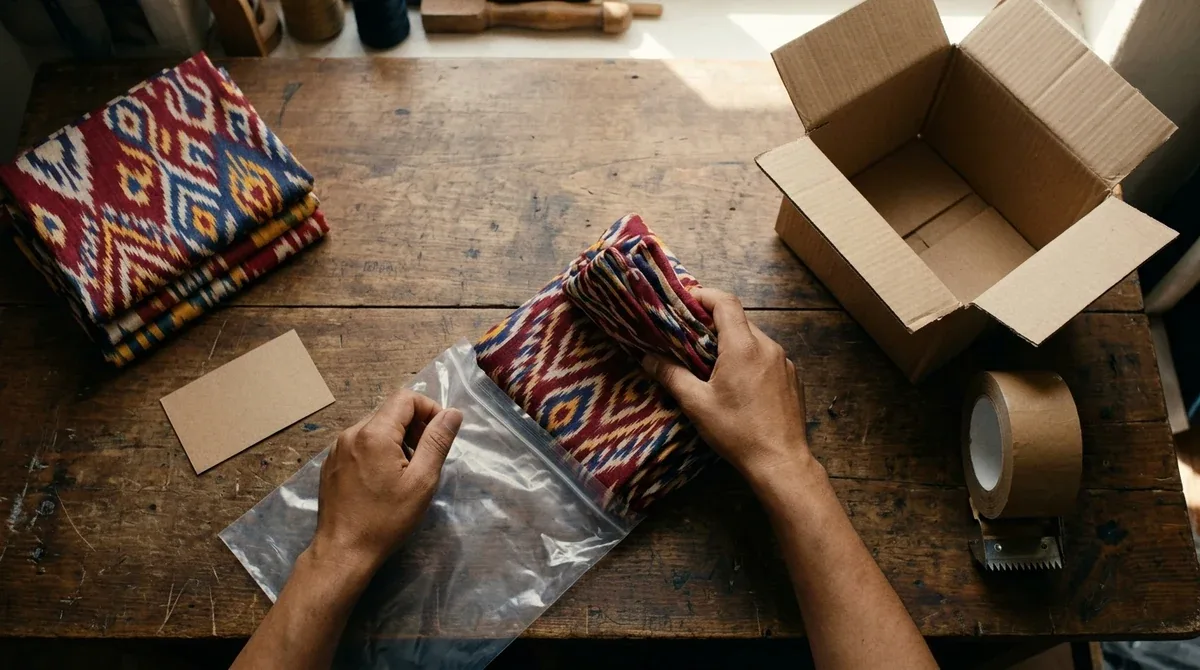
Ikat and textiles. Here you sell your own design, so there are fewer price wars, but you need a brand. Brand Registry is Amazon's programme for brand owners; it helps protect your listings from other sellers. It requires a registered or pending trademark from the trademark office of a country with an Amazon store (sell.amazon.com). More on this in protecting your brand on marketplaces. How to separate series production from one-off pieces is covered in selling handmade and national products.
Dried fruit and nuts. Demand exists, and so does strong competition. FDA does not pre-approve food. However, every facility that makes, packs or holds the food must be registered with FDA (fda.gov). A foreign facility designates one US agent who is physically present in the US. Registration is renewed every two years, in October–December of even-numbered years. Each shipment needs Prior Notice to FDA, and labels must meet US requirements. Amazon may also require approval before you can list some grocery items.
Which group does your product fall into? If it needs documents, do not produce the batch until they are in place.
How the money arrives, and how much stays
Main fees in the Amazon US store (sell.amazon.com, checked November 2026):
- Professional plan — Amount: USD 39.99 per month
- Individual plan — Amount: USD 0.99 per item sold
- Referral fee (a cut of each sale) — Amount: 8–45% by category, 15% in many, usually at least USD 0.30
- Clothing and accessories — Amount: 5%, 10% or 17%, depending on price
- FBA — Amount: separate: depends on size, weight and storage time; use the Revenue Calculator
Hypothetical example. An ikat cushion cover sells for USD 40. In Home and Kitchen the referral fee is 15%, so USD 6. Assume an FBA fee of USD 7 (take the real figure from Amazon's calculator). Freight, duty and broker cost an assumed USD 5 per unit. Production and packaging cost USD 10. Advertising in the first months runs USD 6 per sale. What is left: 40 − 6 − 7 − 5 − 10 − 6 = USD 6, or 15% of the price.
Now add returns, storage fees on slow stock and currency conversion. Six dollars can easily become two or three, so build in a buffer. If the margin is too thin, rethink the price, a bundle option or the product itself.

Common mistakes
- An account in someone else's name. Verification exposes it, and the account and funds get frozen.
- No plan for the importer of record. The freight reaches port, and nobody can receive it.
- Leaving FDA for later. A food shipment gets held at the border.
- Selling without a brand. Other sellers can attach themselves to your listing.
- Too many stores at once. Nothing performs well.
- Guessing the fees. Setting a price without checking the category and FBA size tier in the calculator.
A 90-day plan
Days 1–30: choose the route. Decide whose name the account will be in and check the country list. Pick one store and one to three products. Run the category, referral fee and FBA fee through the calculator. File the trademark application. For food, start FDA registration.
Days 31–60: prepare. Open the account and pass verification. Agree on the importer of record and the broker. Prepare listing photos and English copy. Pack a small test batch and complete the export paperwork.
Days 61–90: test sales. Once the batch reaches the warehouse, launch the listing and test demand with a small ad budget. Record sales, conversion, returns and profit per unit every week. For channels to reach foreign buyers beyond Amazon, see export marketing from Uzbekistan.
The goal of these 90 days is not profit but proof that the chain works and the numbers are real.
Conclusion
Selling Uzbek-made goods on Amazon is possible, at the very least through a company abroad or a partner. But it is not "open an account and sell". First decide who the seller of record is: the producer, your company abroad or you as a partner. Then pick one store, choose FBA or a partner warehouse, and settle the importer of record. For food, FDA is the gate; for textiles, a brand and a trademark. Check fees in Amazon's calculator and start with a small batch. Then the first 90 days give you real figures, not guesses.
This article is general information, not legal, tax or customs advice. Amazon rules and fees, US tariffs and Uzbek law change: check current texts on sellercentral.amazon.com, fda.gov, lex.uz and customs.uz.
Frequently asked questions
Can a resident of Uzbekistan open an Amazon seller account directly?
Amazon keeps a list of countries accepted for seller registration in its Seller Central help pages. In May 2021 that list grew to 188 countries, and press reports at the time said Uzbekistan was added. The list changes, however, and its current status could not be confirmed from public official pages. Check the list and the country drop-down in the registration form yourself. You will also need an internationally chargeable credit card, a bank account Amazon can pay out to, documents and identity verification.
How much does Amazon charge sellers?
In the US store the Professional plan costs USD 39.99 per month and the Individual plan USD 0.99 per item sold. On top of that comes a referral fee on each sale: 8% to 45% depending on category, 15% in many categories, usually with a USD 0.30 minimum (sell.amazon.com, checked November 2026). FBA storage and fulfilment fees are charged separately.
What does it take to sell Uzbek dried fruit on Amazon in the US?
FDA does not pre-approve food products, but every facility that makes, packs or holds the food must be registered with FDA. A foreign facility designates one US agent who is physically present in the United States. Registration is renewed every two years, between 1 October and 31 December of each even-numbered year. Each shipment needs Prior Notice to FDA, and labels must meet US rules. Amazon may also require approval before you can list some grocery products.
Can Amazon act as importer of record for my FBA shipment?
No. According to Amazon's help pages, Amazon and its fulfilment centres do not act as importer of record, the party responsible for the import at customs, for any FBA inventory. You, your company or a partner must take that role and pay the duties.
Is Amazon worth it for the products you source in Uzbekistan?
A short call is enough to look at the product, the price and who should be the seller of record, and to estimate the account route, the FBA or FBM choice and margin per unit before the first batch ships.


