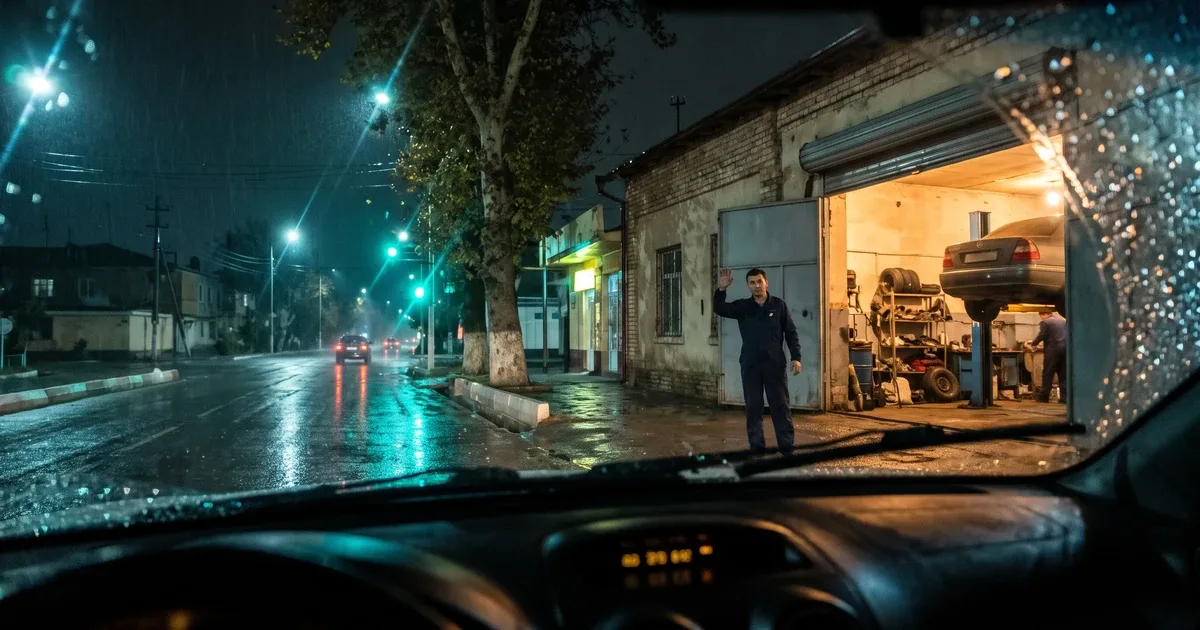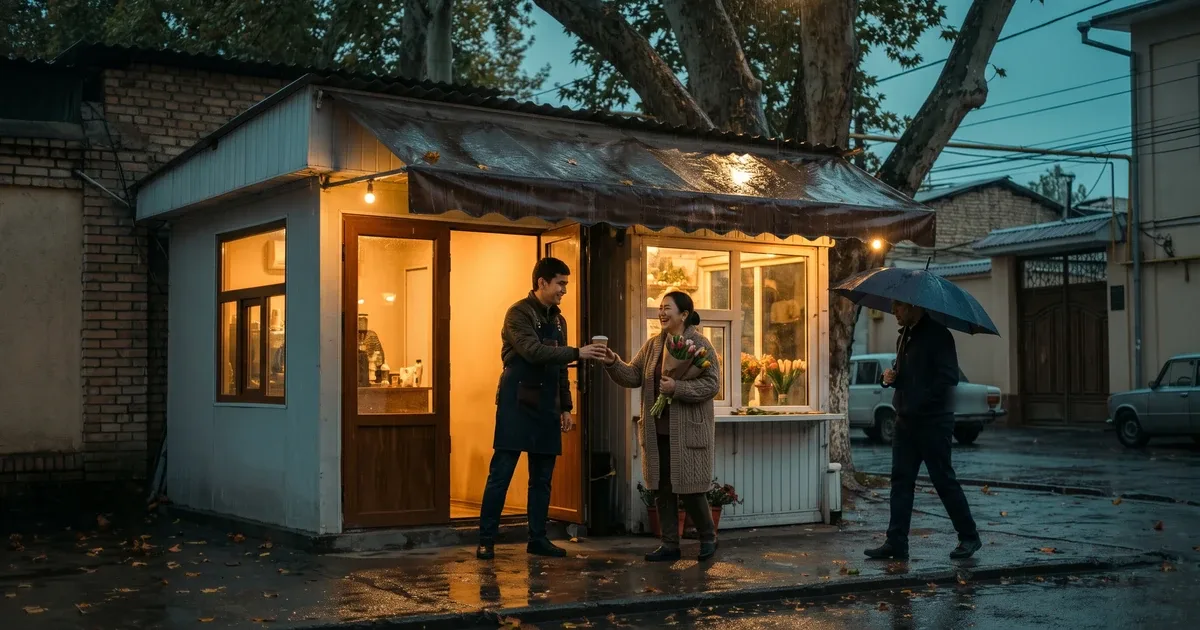

Picture a mahalla street in Tashkent with two tandir bakeries on it. The bread is the same, and so is the price. Yet at six in the morning, before dawn, the queue forms at only one door. The reason is simple: there, the first batch comes out of the tandir at exactly 6:00 every day, and the whole neighbourhood knows it. This is an illustrative example.
When you enter Uzbekistan, local customers already have their bakery, pharmacy and repair shop. "High quality" will not move them, because everyone says it. You need one specific promise that gives them a reason to switch: a unique selling proposition, or USP. This article shows how to find yours, put it in one sentence and test it in local ads on a small budget.
A USP does not come from head office. It comes from target audience research in the new market: without knowing what local buyers value, you cannot find the difference that matters.
What a USP is, and what it is not
A USP is one concrete promise to the customer: "Buy from us and you get exactly this."
The term was popularised by the American advertising executive Rosser Reeves. In his 1961 book "Reality in Advertising" he set three conditions. The ad makes a specific benefit proposition to the buyer. The competition cannot or does not offer it. And the promise is strong enough to pull in new customers. The logic still holds.
Three things are often mistaken for a USP:
- Positioning. Brand positioning is the brand's overall place in the market: who you serve and which alternative you beat. A USP is one claim that follows from it, the one you say in ads and test.
- A slogan. A slogan has to sound good; a USP has to be believable. "Delicious bread" sounds pleasant but promises nothing.
- A discount. A local rival can match "20% off" tomorrow. A difference built on price disappears the day a competitor cuts theirs.
A USP is not a commercial proposal either. A commercial proposal and price presentation is a document for one client: prices, packages, terms. A USP lives in the ad headline, the shop window and the salesperson's first sentence.
Five signs of a strong USP
Run every option through five questions. If any answer is "no", rewrite it.
Also read Ads Manager says zero conversions while the DMs keep coming. Setting up Meta Pixel and Conversions API in Uzbekistan- Is it specific? Not "fast" but "within an hour". Not "quality" but "a six-month written warranty". It needs a number, a deadline or a clear action.
- Does the customer care? What you are proud of may mean nothing to the buyer. The baker cares where the tandir came from; the customer cares that bread is ready at 6:00.
- Do competitors lack it, or simply not say it? The second case counts too. If every bakery opens early but nobody mentions it, the first one to say so owns the difference.
- Can you prove it? The customer will check the promise on the first purchase. A broken USP is worse than no ad at all, because a disappointed buyer tells others.
- Is it short? A salesperson should say it in one breath, and a customer should be able to repeat it to a friend.
Where to find your difference
Many companies believe they sell what everyone sells. Usually there is a difference; it just sits where nobody looks:
- Customer conversations. Call 5–10 recent local buyers and ask: "Why did you choose us? What did you use before?" Their words are often a ready-made USP.
- Reviews. Read reviews of you and your rivals on maps, in Telegram groups and on Instagram. Repeated praise is your strength; a recurring complaint about a rival is your opening.
- Competitor ads. Put what 5–7 local competitors promise into one table. If everyone says "quality and low prices", those words are taken. For a structured method, see competitor marketing analysis.
- Process. A routine of yours, such as a photo of every order before shipping, may be news to local customers.
- Guarantee. If competitors promise verbally, give a written warranty. Taking on the risk yourself is a strong difference, especially for an unknown brand.
- Speed. Production, response or delivery time, but only if you hit it every time.
- A narrow segment. A segment is a group of customers with a shared trait. Choose one instead of "everyone": small kitchens, wedding halls, corporate orders. Narrowness itself is a difference.
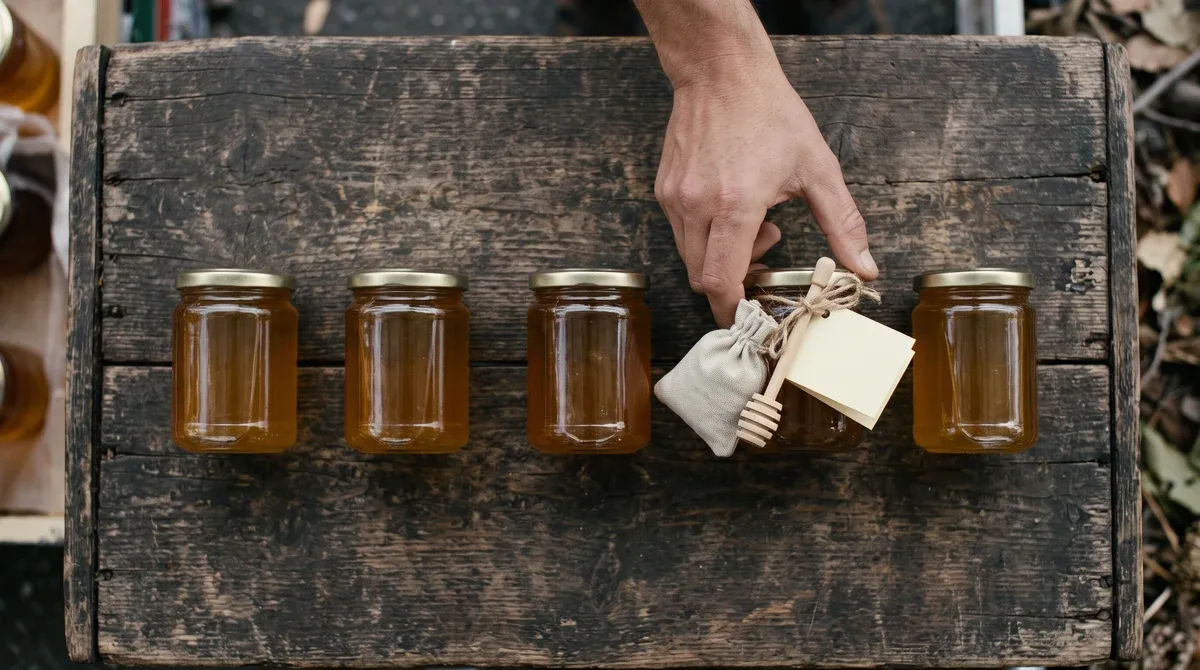
Another illustrative example. Five bazaar sellers offer honey in identical jars at almost the same price. The fourth adds a linen pouch, a wooden dipper and a small card naming the district apiary and the month of harvest. Buyers reach for that jar. The honey is the same, but its origin is proven and tasting is easy.
USP formulas: three templates
A formula gets you past the blank page. Write three or four options for each.
1. Who it is for + what result + what proof. "For early commuters: hot bread every day at 6:00. If we are late, your second loaf is free."
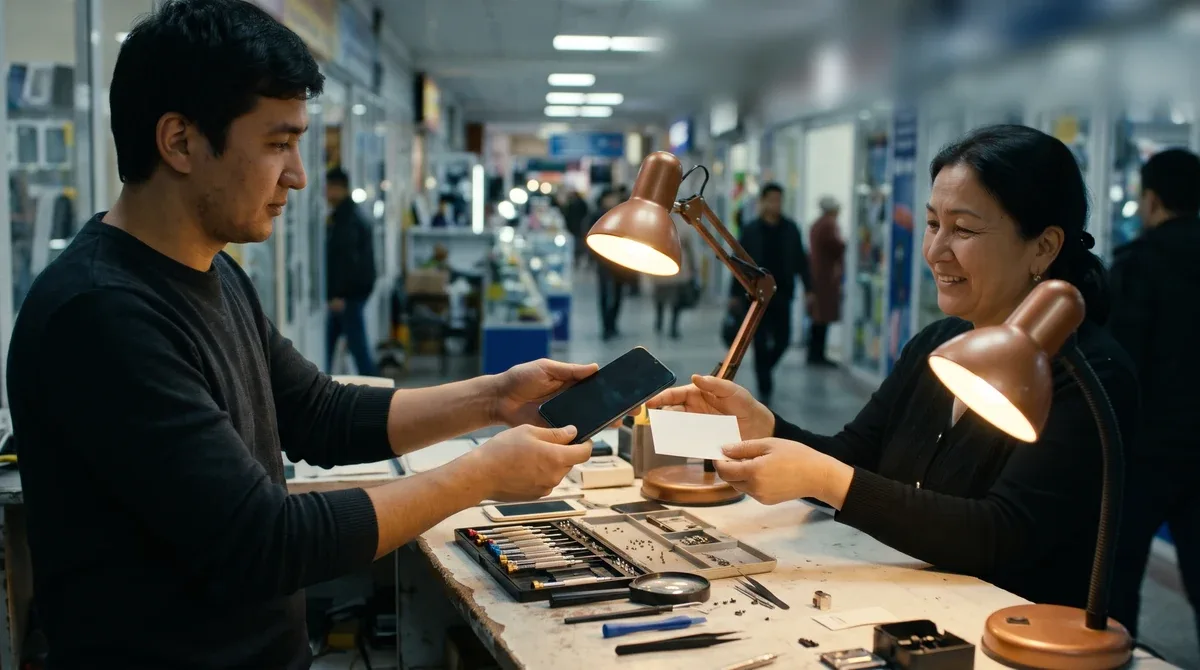
2. Problem + solution + guarantee. "Cracked screen? We replace it within an hour and give a six-month written warranty."
3. Difference from the usual alternative. "Unlike ordinary bazaar honey, every jar names the apiary and the month of harvest, and you taste before you buy."
In the third formula, do not name a competitor or run them down. Compare yourself with the alternative: "ordinary", "the usual", "doing it yourself".
Screen every option against the five signs again. Two or three out of ten usually survive, and those go to testing.
Testing in ads: which option wins
You find out which USP sells in the market, and the cheapest market test is advertising. It follows A/B test logic: two or three options run under the same conditions and differ in one element only.
The process:
- Pick 2–3 options. Make them sharply different: one about speed, one about the guarantee, one about price.
- Change only the promise. Same image, format and call to action; the difference is in the headline and first line. How to write the copy itself, in Uzbek and Russian, is covered in ad copywriting.
- Equalise the conditions. Same audience, budget and duration for every option.
- Track three metrics. CTR (click-through rate): the share of viewers who clicked. Cost per lead: what one Direct message or call cost. Conversion to sale: how many who wrote actually came in or bought.
- Choose the winner by sales, not by clicks.
An illustrative calculation. A foreign phone repair chain opening its first counter in a Tashkent shopping passage tests three options on Instagram, UZS 300,000 each over seven days, UZS 900,000 in total. The numbers are invented and only show the logic:
- A: "Ready within an hour" — CTR: 1.2%; Wrote in: 30; Cost per lead: UZS 10,000; Came to the counter: 6; Cost per customer: UZS 50,000
- B: "Six-month written warranty" — CTR: 0.9%; Wrote in: 20; Cost per lead: UZS 15,000; Came to the counter: 9; Cost per customer: ~UZS 33,300
- C: "Price quoted before we open the phone" — CTR: 1.5%; Wrote in: 40; Cost per lead: UZS 7,500; Came to the counter: 5; Cost per customer: UZS 60,000
Cost per customer = option budget ÷ people who came to the counter.
Option C got the most clicks and the cheapest leads, but the cheapest customer came from option B. People who read about the warranty wrote less often, yet those who wrote were ready to come in: for an unknown brand, a written guarantee lowers the risk of trying. Judging by CTR alone, you would have picked the wrong option.
One caution: 5–9 customers is a small sample, so the gap may be chance. Test the winner another week against a new option. If it wins twice, put it into the profile, shop window and sales script.
To know which ad an enquiry came from, give each option its own code word or a separate Telegram link.
No ad budget yet? Run the test at the counter. For one week staff open with option A, the next week with option B, and log daily how many people asked and how many bought. It is slower than ads, but the logic is the same: one thing changes, everything else stays put.
Common mistakes
- Three USPs in one ad. "Fast, cheap and guaranteed" leaves the customer remembering nothing.
- Unproven superlatives. "The best", "the cheapest", "No. 1" — everyone writes this, so nobody believes it.
- Head-office pride instead of a benefit. "30 years in Europe" means little until you turn it into a result: what can you do faster, safer or cheaper for this customer?
- A promise you cannot keep. You wrote "ready within an hour", but some days the part is not in stock. Spell out the condition: "within an hour if the part is in stock".
- Competing on price alone. Price is the easiest difference to copy, and local players can often match it. To anticipate their reaction to your entry, read responding to a new competitor.
- Switching without testing. After one quiet week the USP is replaced, though the problem may be the audience or budget. Change one thing at a time.
A one-day work plan
If you collect customer phone numbers and review links in advance, one working day gets you to the first test:
- 09:00–10:30 — Task: Calls to 5 local customers: why they chose you, what they used before; Output: Customer wording list
- 10:30–12:00 — Task: Reading reviews of you and competitors; Output: Recurring praise and complaints
- 13:00–14:00 — Task: Table of 5–7 competitors' ads; Output: List of claims already taken
- 14:00–15:30 — Task: 6–9 options using the three formulas; Output: Option list
- 15:30–16:30 — Task: Screening against the five signs; Output: 2–3 finalists
- 16:30–17:30 — Task: Ad, code word and budget for each finalist; Output: Ads ready to test
In the evening, read the finalists to your local team and ask: "Can we say this to every customer from tomorrow, and deliver it?" If anyone hesitates, the promise is not ready yet.
Summary
A USP is one concrete promise: it matters to the customer, competitors have not claimed it, and you can keep it every time. It already sits in what local customers say, in reviews, in your process and in your guarantee. Formulas fit it into one sentence, an ad test shows which sentence sells, and customers who come in, not clicks, decide the winner.
What one sentence will a customer in Tashkent use tomorrow to recommend you to a friend? Find it, and half of your USP is done.
Frequently asked questions
Can we bring our home-market USP to Uzbekistan?
Treat it as one candidate, not the answer. A claim that was rare at home may be standard in Tashkent, and a feature nobody noticed at home may be the thing local buyers value most. Put the home USP into the same ad test as two locally sourced options.
Is a USP the same as positioning?
No. Positioning is the brand's overall place in the market: who you serve and which alternative you beat. A USP is one concrete promise that follows from it. You say it in ads, test it and replace it if needed, while positioning stays stable for much longer.
How much budget does a USP test need?
It depends on your price and category, so there is no universal figure. The rule is that every variant gets the same budget, audience and duration, and each collects at least several dozen enquiries. Decisions based on a handful of leads often reward chance.
Should the USP be in Uzbek, Russian or English?
For most consumer audiences, write it in Uzbek and Russian as two native texts, not a translation. Test the wording in both languages, because a promise that sounds natural in one can sound stiff in the other. English works mainly for expatriate and some B2B audiences.
Want a second opinion on your USP options?
Let's review local customer feedback, competitor ads and your current offer, pick 2–3 USP options worth testing in Uzbekistan and outline a small-budget test plan. Free consultation.