
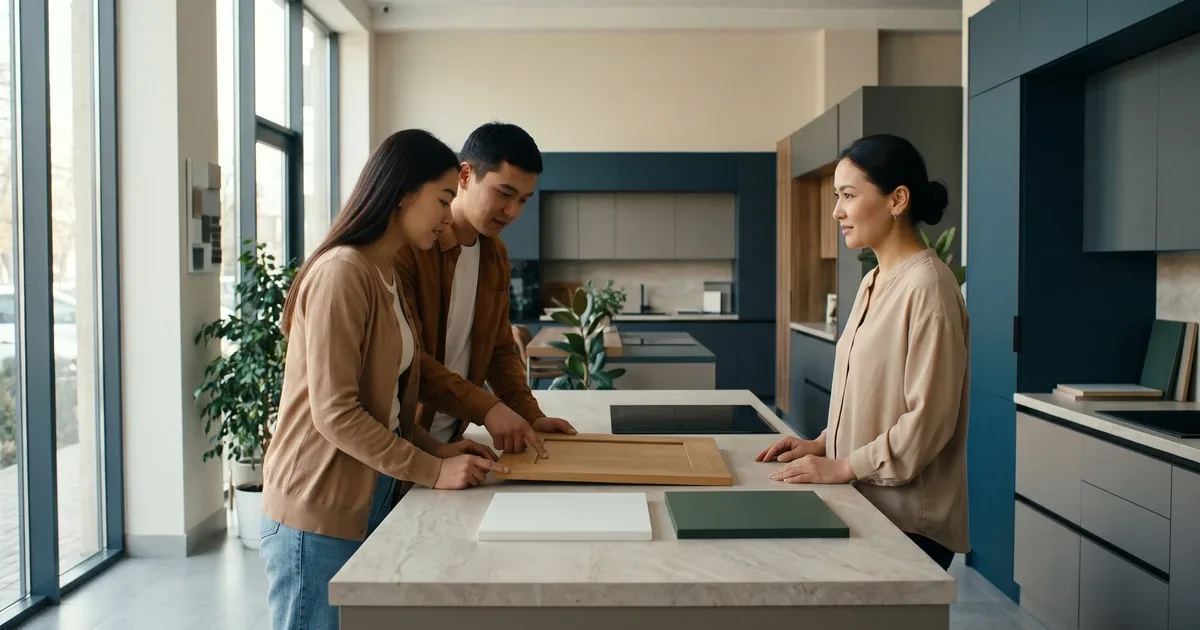
Your ads are running and the landing page is sending enquiries. Yet the first thing your sales manager hears on the call is: "How much is it?" For a fitted kitchen, nobody can answer that without measurements. The call ends in five minutes, and the customer messages the next workshop. Has this happened to your team in Uzbekistan?
A quiz landing page solves much of this. It is a page built as a short survey. The visitor taps through 5–7 simple questions and leaves a contact at the end. This guide covers the question order, the bonus, lead quality filters and the handover to sales.
A lead is a person who showed interest and left their contact details. A quiz is one link in a marketing system for business. It brings a person from an ad to your sales team already qualified.
Quiz landing page vs. a regular landing page and a lead magnet
On a regular landing page, people read the copy and fill in a "name, phone" form. How to build that kind of page is covered in the guide to a landing page that sells. A quiz has little copy. People do not read; they choose.
A lead magnet is something downloadable offered in exchange for a contact: a guide, a catalogue, a checklist. Its job is to get the contact. A quiz has a different job: to capture the customer's needs together with the contact.
A quiz funnel is most useful in three situations:
- The price depends on many parameters. Furniture, renovation, windows, training, equipment.
- Customers are not sure what they want. The questions help them decide step by step.
- Sales time is expensive. Every unnecessary call or site visit costs money.
If the product is simple and the price is on the page, a quiz becomes an extra step. A short form or a messenger button will work faster.
Quiz questions for lead generation: a 5–7 step structure
A hypothetical example. A small kitchen-furniture workshop in Tashkent has five craftsmen, one sales manager and one measurer. Its ads used to lead to a plain form. The measurer drove to several addresses a week. But some customers only heard the price after the measurement, and walked away. The workshop switched to a quiz with these questions:
Also read What Makes a Customer in Uzbekistan Pick You Over the Shop Next Door? Building a Unique Selling Proposition- What shape is your kitchen? Straight, L-shaped, U-shaped, with an island. Each option has a small diagram.
- Roughly how long is the wall? Under 2 m, 2–3 m, 3–4 m, over 4 m, "not sure".
- Which cabinet doors? Matte painted, wood-look, laminate, "need advice". With photos.
- Which appliances will be built in? Oven, hob, dishwasher, fridge. Several can be ticked.
- Approximate budget? Three or four ranges in so'm and "not sure yet".
- When do you need the kitchen? Within a month, in 1–3 months, just checking prices.
- Where should we send the result? Phone number and preferred messenger.
Notice the order. The first questions are easy and fun: tapping a picture takes no effort. Budget and timing sit in the middle, once the visitor is engaged. The contact comes last.
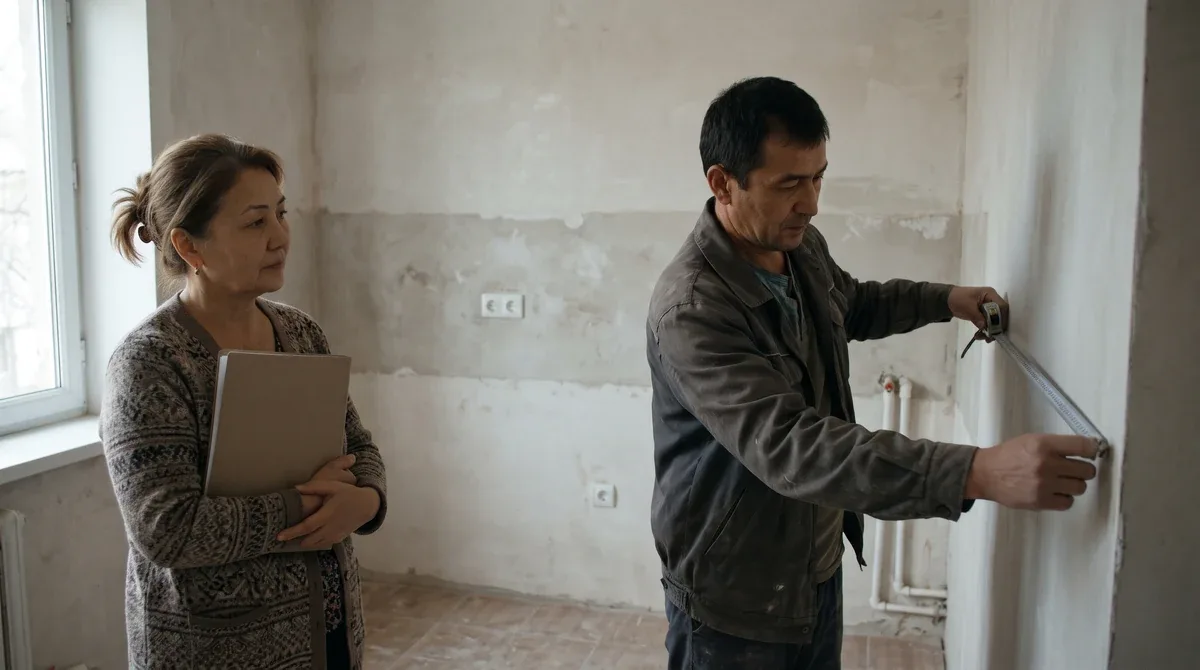
Each answer settles one question in advance. Before leaving the workshop, the measurer knows the kitchen shape, the length and the appliance list. He arrives with the right samples and a rough estimate. The customer gets the price range before the visit. Anyone whose budget does not fit never books the measurer, so there are fewer wasted trips.
Three rules for writing questions. Offer ready-made answers and keep typing to a minimum. Always keep a "not sure" option, or people will stall. Show progress at the top of the screen, such as "3/7".
Quiz incentive, the contact step and lead quality
At the end of the quiz, people should get something. Otherwise they see no reason to share a contact. A bonus tied to the quiz topic works best.
Types of quiz incentive
- A rough estimate. "A price range based on your answers." The strongest option, because that is exactly what people came for.
- A matching selection. Photos of finished kitchens with the chosen doors and layout.
- A free service. Measuring, a meeting with a designer, a 3D sketch.
- A discount or gift with a deadline. Be careful: a big discount mostly attracts bargain hunters.
Promise the bonus on the first screen: "Answer 7 questions and find out what your kitchen will cost." Then deliver it. A call instead of the promised estimate damages trust.
Where to ask for the contact
Ask for the phone number at the last step, before sending the result. The visitor has answered six questions and wants the outcome. Let them choose how to be contacted: a call, Telegram or WhatsApp.
A name and a phone number are personal data. They fall under Uzbekistan's Law "On Personal Data" (No. ZRU-547 of 2 July 2019). Under Article 21, consent must be given in a form that can later be proven. Article 10 limits collection to data that is necessary and sufficient for the task. So do not add questions you do not need. Use a consent checkbox that is not pre-ticked. Have local counsel check the exact wording.
Filtering lead quality
Lead quality is the likelihood that an enquiry turns into a purchase. Quiz answers reveal it in advance. Split leads into three groups:
- Hot: needed within a month, budget given. Sales calls these first.
- Warm: 1–3 months, or budget "not sure". Called after the hot ones.
- Cold: "just checking prices". They get the estimate and photos, with a follow-up later.
A quiz tool or a CRM can do this sorting automatically. A CRM is a system for managing customers and enquiries. When each answer sits in its own field, filtering takes one click.
Handing the lead to sales and the first call
Great answers are useless if the sales manager never sees them. If a lead waits a few hours, the customer has time to contact another workshop. So the handover must be automatic.
The lead record should include:
- name, phone and preferred messenger;
- every quiz answer, together with the question text;
- which ad and which creative brought the lead. UTM tags show this — source labels added to the end of an ad link;
- a hot, warm or cold flag.
To stop leads from slipping away, you need a response-time standard and clear statuses. The guide to lead handling sets this up step by step.
On the first call, the manager does not repeat the quiz questions. He confirms the answers and proposes the next step. In the hypothetical workshop, the call opens like this:
"Hello, Malika. You chose an L-shaped kitchen, about three metres, with wood-look doors. I've sent the estimate to your Telegram. Our measurer can come on Thursday or Saturday. Which day suits you?"
The customer feels heard. The conversation starts with a date, not a price. Once the order is placed, sizes, materials and deadlines must reach production without errors. That is covered in the article on ERP for furniture manufacturing.

Quiz conversion rate: which numbers to track
Conversion is the share of people who move from one step to the next. In a quiz it is not one number but a chain:
- How many visitors answered the first question.
- How many dropped off at each question.
- How many of those who reached the end left a contact.
- How many leads the sales manager actually spoke to.
- How many measurements and contracts followed.
CPL (cost per lead) is ad spend divided by the number of leads. A hypothetical calculation: 6 million so'm spent on ads in a month brought 120 leads. CPL is 50,000 so'm. If 12 of them signed, each contract cost 500,000 so'm.
Base decisions on cost per contract, not on CPL. Cheap leads that never buy turn out expensive.
Your ad platform also needs to see the moment a contact is submitted. Meta Pixel has a standard Lead event for this. Fire it when the contact is sent, not on the intermediate questions. Setup is explained in the guide to Meta Pixel and the Conversions API.
Before launch: a 7-point check
Before switching on the ads, go through the quiz yourself on a phone, start to finish. Answer each point with yes or no:
- Are there no more than seven questions, and does each one affect the sale?
- Does every question have a "not sure" option?
- Can the quiz be completed one-handed on a phone, without typing?
- Is the contact requested only at the last step, with the consent box unticked by default?
- Does the promised estimate or photo selection arrive automatically within minutes?
- Did a test lead land in the CRM with every answer, the UTM tags and a hot/warm/cold flag?
- Did the Lead event fire once, and only when the contact was submitted?
A single "no" means part of the ad budget is being wasted. Fix that point first.
Conclusion
A quiz landing page is a strong tool for products whose price depends on many factors. It captures the customer's needs, not just a contact. Results depend on three things. First, questions ordered from easy to harder. Second, a clear bonus in exchange for the contact. Third, a fast handover to sales with every answer attached. Judge the quiz by cost per contract, not cost per lead.
Where to start: ask your local sales manager which 5–6 questions they ask on every first call. That list is the first draft of your quiz.
Frequently asked questions
How many questions should a quiz have?
Five to seven is usually enough. Each question should remove one question the sales manager would otherwise ask on the first call. If an answer does not change how you sell, drop the question. Step-by-step drop-off data will show where people leave.
Does a quiz always beat a simple form?
No. If the product is simple and the price is clear, a short form or a messenger button is faster. A quiz pays off when the price depends on many parameters: furniture, renovation, training, travel, equipment. Test both with the same ads and compare cost per contract, not cost per lead.
Can we ask for the phone number at the start?
You can, but that is usually where many people leave. It makes more sense to ask at the end, just before sending the result or bonus: the visitor has already invested time and wants the answer. Put the consent checkbox in the same step.
Our quiz brings many leads in Uzbekistan, but few buy. What should we check?
First check how fast the local sales team calls back and whether they see the quiz answers. Then split leads by budget and timing answers. If many people chose "just checking prices", revisit the bonus or the ad audience.
Want a second look at your quiz?
We will review the question order, the bonus, the contact step and how each lead reaches your sales team in Uzbekistan, and help find the stage where customers drop off. Free consultation.