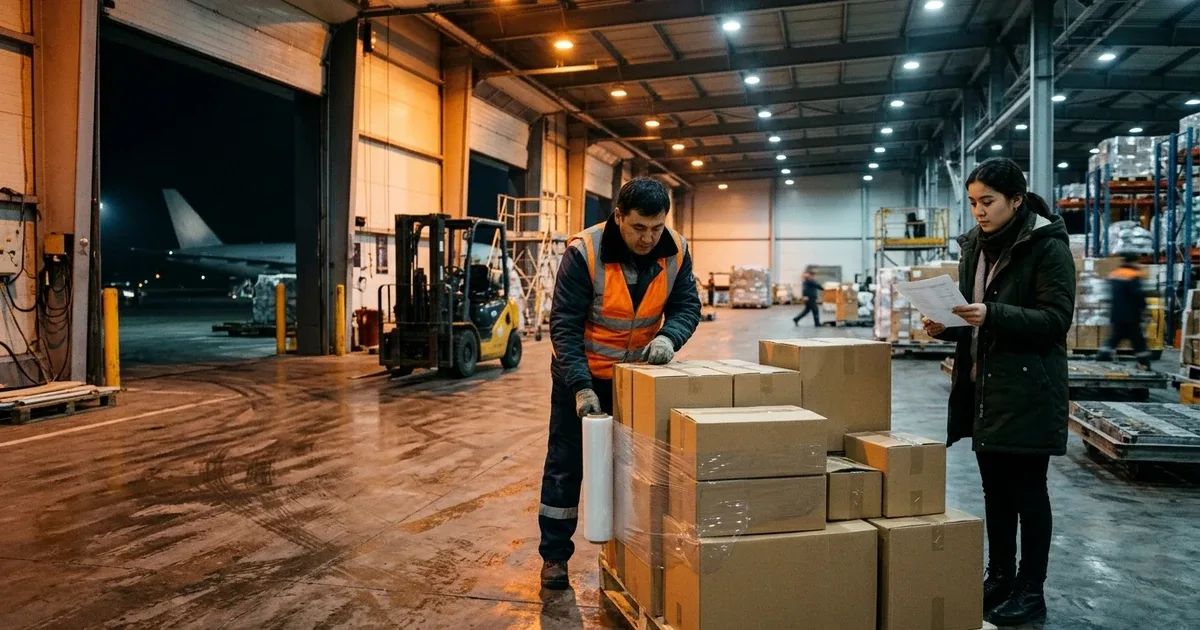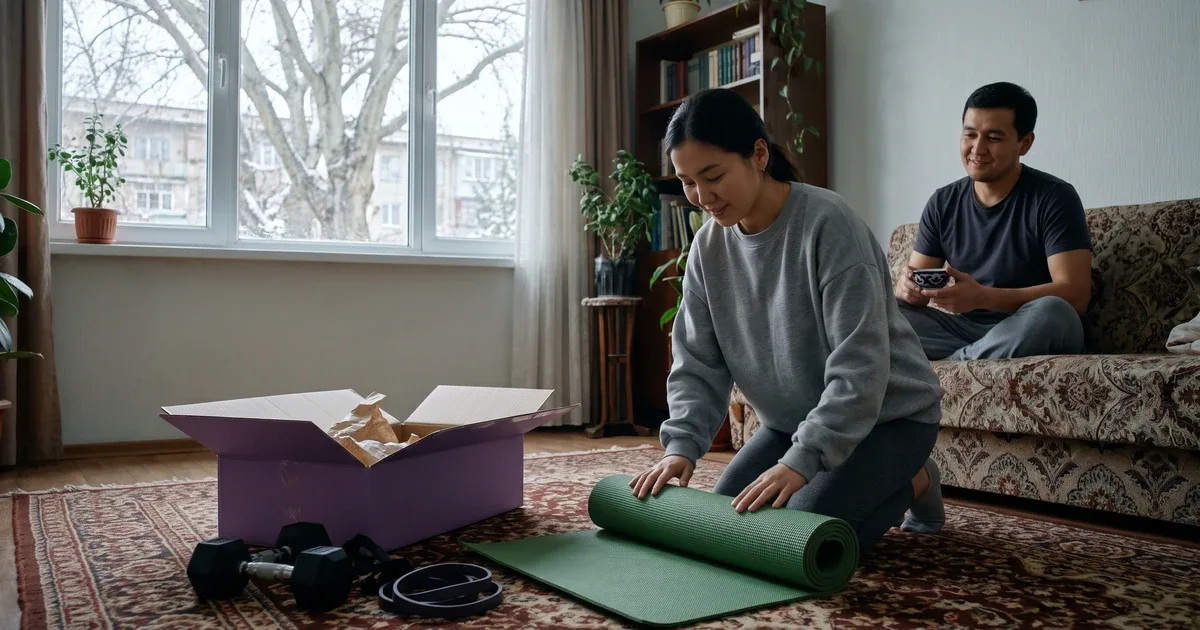
It is the first week of January. People promise themselves a fresh start and search for dumbbells, mats and resistance bands. Your stock, meanwhile, is still in transit or waiting for acceptance at the warehouse. It goes live at the end of February, when the interest has faded. If you are planning to enter Uzbekistan with a sports range, this is the most common way to lose the first season.
Sports goods sell well on Uzbek marketplaces such as Uzum Market, Yandex Market and Wildberries. But in this category, money leaks in three places: arriving late for the season, shipping heavy items and taking back products that did not fit. This guide shows how to avoid those traps, what to put in a listing and how to build a first range.
It is part of the complete guide to selling on Uzbek marketplaces, which covers platform choice and store setup. This article covers only what is specific to sport.
Why sports goods behave differently from other categories
"Sports goods" is not one category. It is several different businesses, each with its own rules:
- Fitness equipment: dumbbells, kettlebells, mats, bands, pull-up bars. The main issue is weight and volume.
- Sportswear and shoes: T-shirts, leggings, football kits, trainers. The main issue is size.
- Bike and scooter accessories: lights, locks, helmets, inner tubes, pumps. The main issue is compatibility with the wheel and frame.
- Machines and large equipment: treadmills, exercise bikes, table tennis tables. The main issue is size and damage.
- Team sports: balls, goal nets, kits. The main issue is seasonality and team orders.
You can combine them in one store. But run the numbers for each group separately. Bands carry a healthy margin, while the same margin on dumbbells can disappear into freight.
The listing: size, weight and who the product fits
Buyers cannot hold the product. They trust the numbers in the listing. With no numbers, they either ask a question or move on to a competitor.
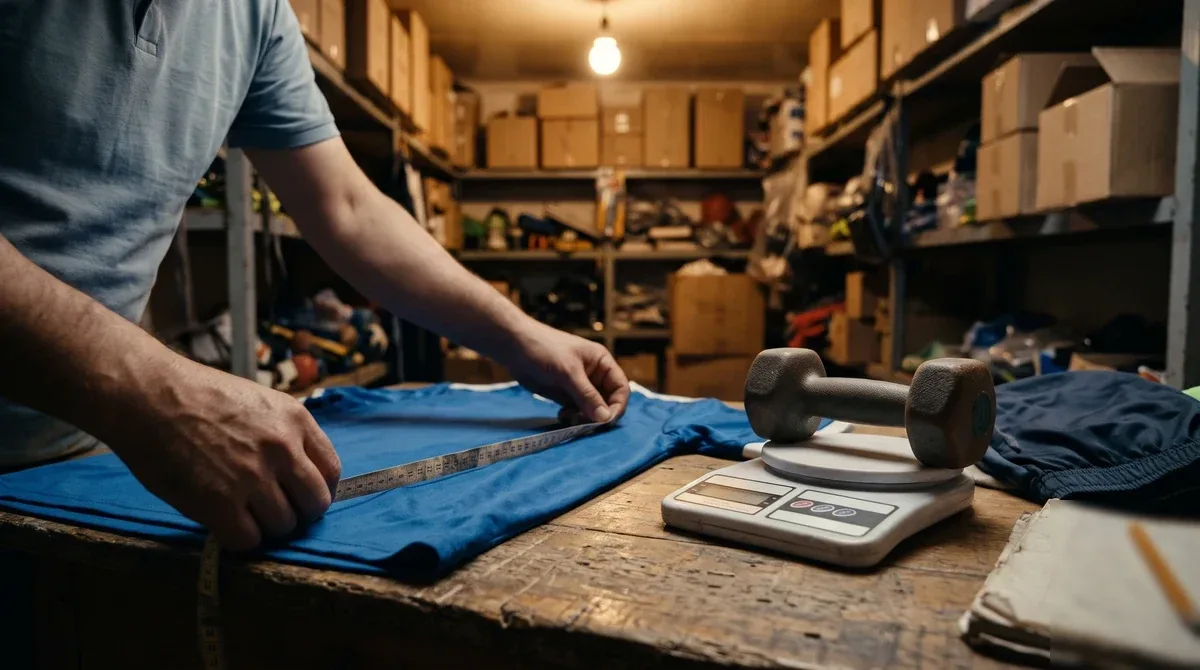
Also read The Sofa Came Back, the Margin Didn't: Selling Bulky Goods on Uzbekistan's MarketplacesFor sportswear, do not copy the factory size chart. Take one finished garment in each size and measure chest, waist, hips and length yourself. State the fit type as well. Compression wear hugs the body tightly to support the muscles, so it is cut small on purpose. If you do not say so, buyers will return it as "too small".
For fitness equipment, the key numbers are different:
- Dumbbells, kettlebells — What the listing must show: exact weight per piece, sold as a pair or single, coating (rubber, vinyl, cast iron)
- Mat — What the listing must show: thickness in mm, size in cm, material, non-slip surface
- Resistance band — What the listing must show: resistance level, length, number of bands in the set
- Pull-up bar, machine — What the listing must show: maximum user weight, assembled dimensions
- Bike accessory — What the listing must show: which wheel diameter, which frame or handlebar size
Local buyers often read listings in Uzbek or Russian, so fill in the attributes in both where the platform allows it. Do not scatter sizes and colours across separate listings. Group them as variants of one model so that reviews collect in one place. How to set this up is covered in listing variants and merging.
Show the product in use: a dumbbell in a hand, a mat on the floor, a light on the handlebar. Give one image to sizes and weight.
Seasons: reading the local sports calendar early
Demand for sport is uneven through the year. A typical picture for Uzbekistan looks roughly like this:
- Late December to February: home fitness. Dumbbells, mats, bands, scales. New Year resolutions drive it.
- March to May: bicycles, scooters, roller skates and their accessories. Footballs and kits pick up as the weather warms.
- June to August: swimming gear and light equipment for travel and the mountains.
- August to September: school PE kits, clothes and shoes for after-school sports clubs.
- October to November: home equipment again, plus the big sale events.
Treat this as a starting point, not a rule. Check platform analytics for your category and, once you have it, your own sales history.
The core rule: stock must be in the warehouse and live before demand starts. Plan backwards. From the week demand begins, subtract warehouse acceptance, transport and your supplier's lead time. For imports, add customs clearance and buffer days. The full method is in marketplace seasonality planning.
Bike accessories left over after the season wait almost a year for the next spring. Decide at the start of the season when you will discount and by how much, not in a panic at the end.
Heavy and bulky items: how freight eats the margin
This is the most dangerous part of the category. Bands fit in an envelope. A pair of dumbbells is freight. A treadmill is a separate logistics project.
On many platforms, delivery and storage fees depend on weight, volume or a size class. The exact tariff varies by platform and fulfilment model (platform warehouse or seller warehouse) and changes over time. Take the numbers from the tariff page or calculator in your seller account, not from someone else's spreadsheet.
Hypothetical example. A seller compares two products. All figures are invented to show the logic, in Uzbek som:
- Selling price — Resistance band set: 120,000; Pair of dumbbells, 2 × 5 kg: 280,000
- Landed cost — Resistance band set: 40,000; Pair of dumbbells, 2 × 5 kg: 150,000
- Freight and storage (hypothetical) — Resistance band set: 8,000; Pair of dumbbells, 2 × 5 kg: 45,000
- Left before commission — Resistance band set: 72,000; Pair of dumbbells, 2 × 5 kg: 85,000
On paper, the dumbbells leave more. But they tie up far more cash. You put 150,000 into the dumbbells to get 85,000 back, about 57 for every 100 invested. You put 40,000 into the bands to get 72,000, or 180 for every 100. The platform commission comes off both separately as a category percentage, so check that in your account too. The same money buys several times more band sets. And if the dumbbells move slowly, storage fees grow every month.
You do not have to drop heavy goods. Just check three things:
- Packaging. Cast-iron dumbbells tear boxes. Double-wall cardboard and corner protection reduce returns.
- Assembly. If a machine is not assembled on delivery, buyers need clear instructions and the right tools. Without them, it comes back as "could not assemble".
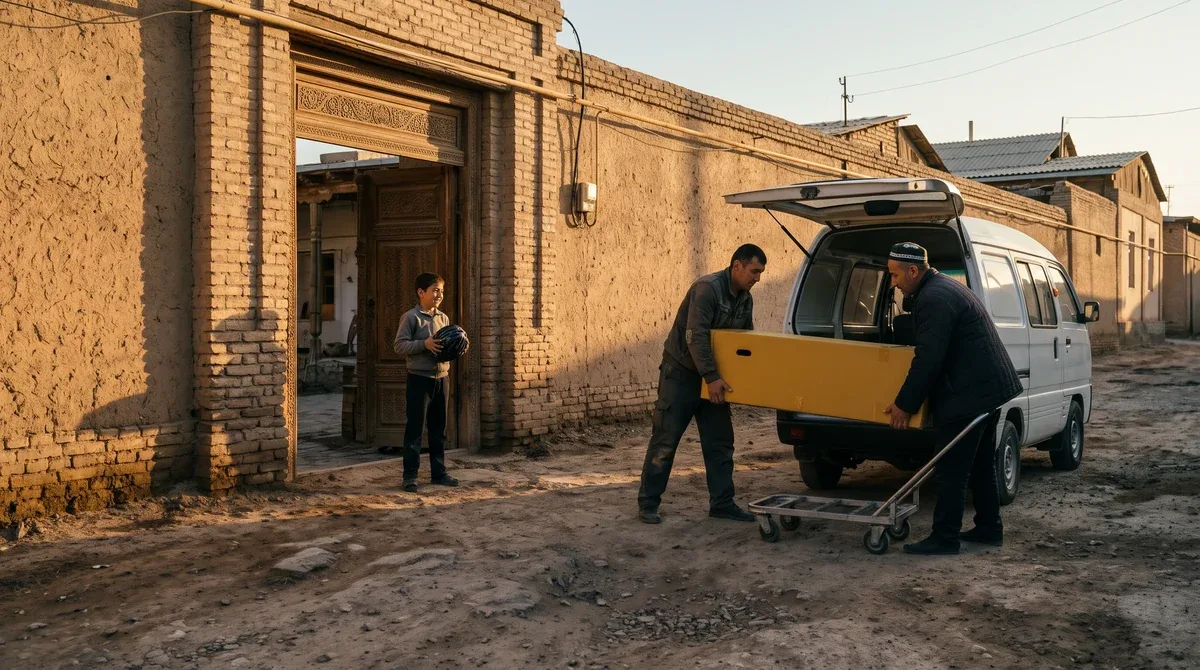
- Damage. Large boxes get flipped in transit. Photograph items at hand-over and at acceptance.
Returns and reviews
Typical reasons for returns in sports goods:
- Size: the leading reason for clothing and shoes.
- "Not what I expected": the mat is thin, the band is weak, the dumbbell coating smells.
- Compatibility: the bike accessory did not fit the wheel or handlebar.
- Damage: crushed or broken in transit.
Log the reason for every return. After a month, the pattern shows. If a mat keeps coming back as "too thin", show its thickness in the listing with a side-by-side comparison photo.
Reviews carry extra weight in sport. Buyers want to know someone else has used the dumbbell and the band did not snap. Answer every negative review calmly and specifically: acknowledge the issue and state the fix. New buyers read your reply alongside the review and decide on both.
Range and price: where to start
New sellers often want to open with large, expensive items. A treadmill looks impressive, the price is high and one sale feels big. The risk is just as big.
Hypothetical scenario. A seller in Samarkand puts exercise bikes into the first shipment. In the first month a few sell and two come back because assembly is difficult. The warehouse starts charging for storage, and working capital sits in boxes. Starting with small equipment would have made the same lesson far cheaper.
A sensible entry sequence:
- Entry products: light, size-free, fast-moving. Bands, ropes, mats, bottles, bike lights.
- Bundles: a "home fitness starter kit". Buyers take more in one decision, and freight goes into one parcel.
- Heavy equipment: once you have seen the unit economics (what one sale leaves after every cost) and the return rate.
General criteria for choosing products are in what to sell on marketplaces.
On price, do not chase the lowest competitor. In sport, buyers distinguish a cheap dumbbell from a good one. If your coating, weight accuracy and packaging are better, show it in photos and do not be afraid to price slightly higher.
Remember wholesale (B2B) buyers too. Small gyms, schools and sports clubs buy equipment in bulk. Knowing how a gym runs its operations helps you build a sharper offer, as described in ERP for fitness clubs.
Documents and safety
Not every sports product needs a certificate. The requirement depends on the customs commodity code, known locally as TN VED and based on the Harmonized System. Conformity rules have been simplified several times in recent years and are still changing. Rely on the current text on lex.uz or a customs broker, not on older advice.
Products for children and protective gear such as helmets and knee pads can face stricter rules. A platform may also request documents when you create a listing or later. Get copies of documents from your supplier before you ship.
Checklist: sports listing and first batch
- ☐ Each group (equipment, apparel, accessories, machines) is costed separately.
- ☐ The apparel size chart comes from measuring finished garments, and the fit type is stated.
- ☐ Equipment listings show weight, thickness, maximum load or compatibility.
- ☐ Freight and storage for every heavy item are calculated in the seller-account calculator.
- ☐ The seasonal batch will be in the warehouse before demand starts.
- ☐ Heavy items have reinforced packaging; machines include assembly instructions.
- ☐ Return reasons are logged every month.
- ☐ The customs code and document status have been checked.
Bottom line
In sports goods, profit rests on three things: reaching the season on time, costing heavy-item freight in advance and giving precise sizes and specs in the listing. Start with light products, raise the basket with bundles and move into heavy equipment once the numbers support it. Today, take your heaviest item and recalculate the full journey of one unit in the seller-account calculator.
Frequently asked questions
Which sports products are the safest way to enter the category?
Light, compact items without sizes: resistance bands, skipping ropes, mats, sports bottles, bike lights and gloves. They are cheap to ship, rarely get damaged and are seldom returned. Move to heavy equipment and machines once you have first sales and know exactly what one unit leaves you.
Is it worth selling dumbbells and kettlebells?
It depends on landed cost and logistics. For heavy items, delivery and storage are often charged by weight or volume and can absorb most of the margin. Calculate the full journey of one unit in the tariff calculator of the seller account for every item before you set a price.
How can I cut returns on sportswear?
Build the size chart from your own measurements of finished garments, state whether the fit is compression or relaxed, and show the model's height and the size worn. Log the return reason by model and size every month.
Do sports goods need certification in Uzbekistan?
Not all of them. Whether you need a certificate or another conformity document depends on the product's HS-based customs code (TN VED). Products for children and some protective gear can face stricter rules. The rules have been changing in recent years, so before shipping a batch, check the current requirement on lex.uz or with a customs broker and read the platform's seller guide.
Bringing a sports range to Uzbekistan?
Let's review your range, the logistics of heavy items and a season plan together, then work out which products will actually earn money in this market.