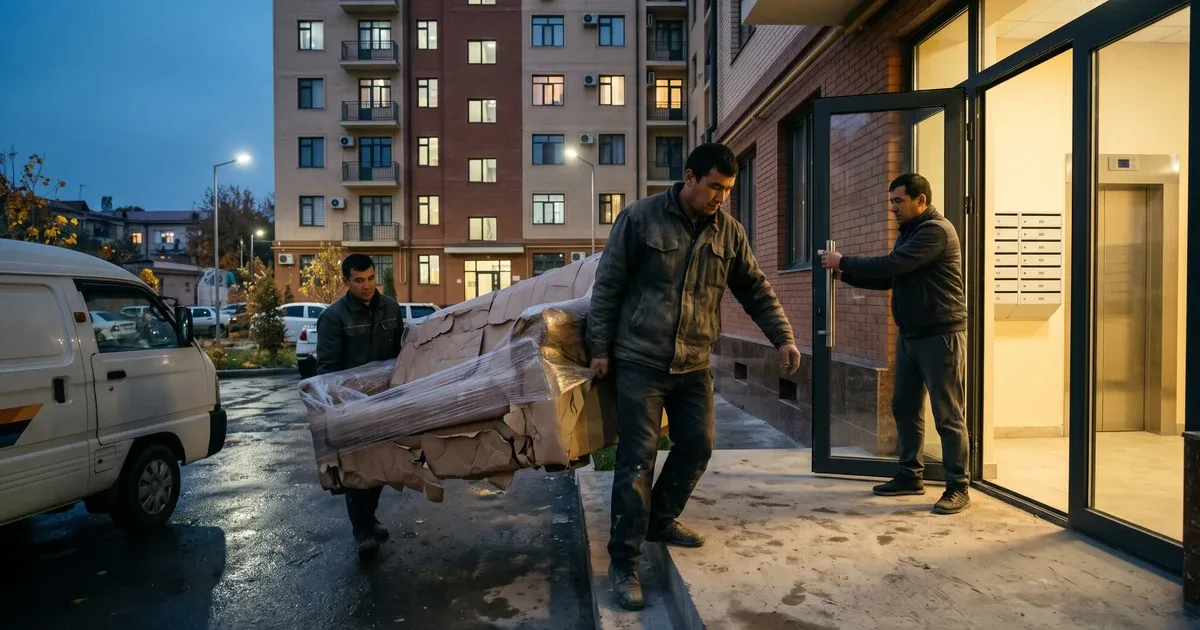
Picture this: you ship a three-seater sofa to a customer in Tashkent. Two days later it comes back with a crushed corner and torn upholstery. Now you are paying for delivery twice, plus repairs, and you have an "arrived damaged" review on the card. You made a sale and lost the margin.
Bulky goods sell well on Uzbek marketplaces, but the money leaks out in places that small parcels never touch. This guide walks you through them: how logistics is charged, which fulfilment model to pick, what packaging must survive, what to do when things break, and how to handle assembly. If you are still setting up your store, start with the complete guide to selling on marketplaces in Uzbekistan.
What makes a bulky item different
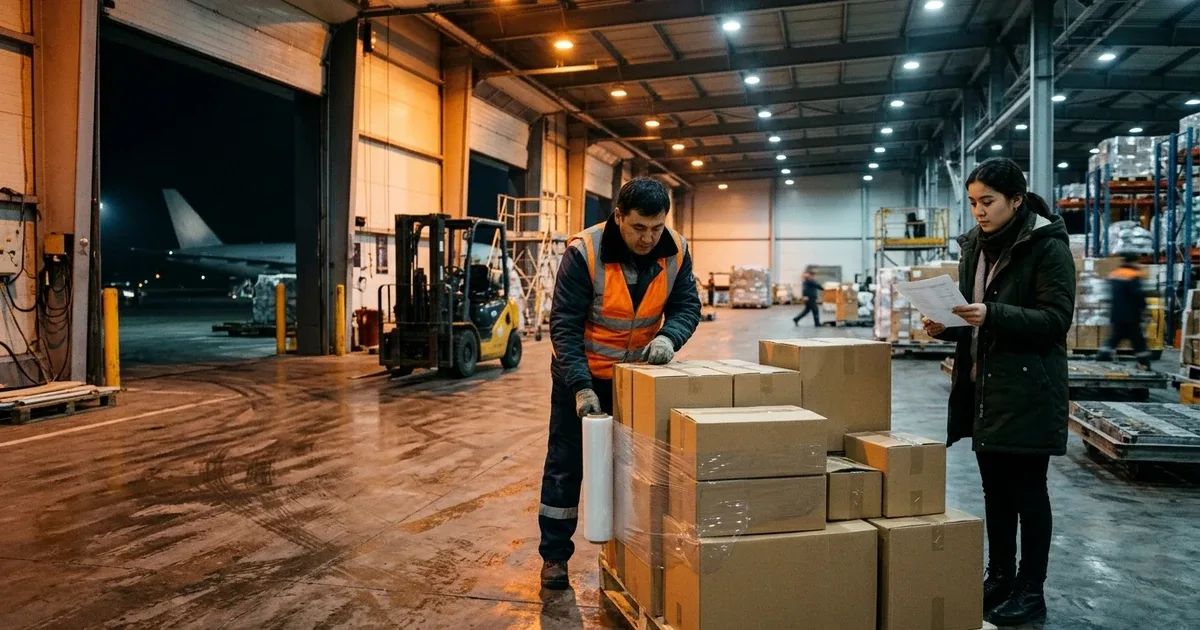
In Russian-language seller documentation you will see the abbreviation KGT (крупногабаритный товар), meaning a large or oversized item. Dimensions here are the length, width and height of the packed item. If a box does not fit the platform's standard sorting line or is too heavy, it is treated as bulky: sofas, wardrobes, mattresses, fridges, washing machines, bicycles.
Each platform sets its own threshold and changes it over time. Do not rely on numbers from another seller or from another country; take them from the seller agreement (public offer) and help centre in your seller account.
Bulky items differ from regular stock in four ways:
- Logistics — every order costs more, sometimes under a separate tariff.
- Warehousing — not every warehouse accepts oversized items, and storage costs more.
- Damage — heavy boxes get moved many times, and every move is a risk.
- Returns — a returned sofa travels the same route again and costs money again.
General issues with homeware such as tableware and textiles are covered in selling home goods on marketplaces. This article sticks to what is specific to large items.
Logistics tariffs: how volumetric weight works
Many courier services charge by volumetric weight rather than actual weight. It is a notional weight based on how much space a box occupies. The usual formula is length × width × height (cm) ÷ a divisor. The divisor is often 5,000 or 6,000, but check the exact factor in your carrier's tariff. Some marketplaces skip the conversion and price logistics directly by the box's volume in litres. The logic is the same: the more space a box takes, the more it costs.
Also read Selling Sports Goods on Uzbek Marketplaces: Three Places Margin LeaksThe higher of the two weights is then used. This is where a light but large box becomes expensive.
Hypothetical example. A flat-pack bookshelf ships in a 180 × 40 × 12 cm box and weighs 18 kg. Volumetric weight: 180 × 40 × 12 ÷ 5,000 = 17.3 kg. Hardly any difference. Now an upholstered armchair: 90 × 85 × 80 cm, 15 kg. Its volumetric weight is 122 kg. The chair is lighter than the shelf, yet for the tariff it is eight times "heavier" than it really is.
Two practical takeaways:
- Flat-pack products are far cheaper to move than upholstered furniture. If your product can ship in parts, consider it.
- Dimensions and weight on the card must match the real box. Understate them and the warehouse may re-measure the box and deduct the difference.
Broader ways to bring delivery costs down are covered in how to reduce marketplace logistics costs.
FBO, FBS or DBS: choosing a model for large items
There are three main models:
- FBO — your stock sits in the platform's warehouse and the platform delivers.
- FBS — stock stays in your warehouse; you hand each order to the platform.
- DBS — you deliver to the buyer yourself; the platform provides the storefront and payment.
For bulky goods, DBS is often the most sensible option. For example, in a press release dated 20 May 2025, Uzum Market announced a DBS model starting on 2 June 2025. The release named bulky items among the categories that could now be sold through it. According to the release, no logistics fee applies under DBS; only the sales commission remains. Terms may have changed since then, so check the current rules in the seller agreement in your account.
DBS has its price: you carry full responsibility for delivery, carrying items upstairs and meeting deadlines. Without a reliable van and crew, the commission you saved goes into late orders and poor reviews.
One question is often forgotten: how far does delivery go? To the building entrance or into the flat, is there a lift, and who carries a sofa up five floors in an older Soviet-era block? State this clearly on the card and in your delivery terms. Otherwise the buyer may refuse a sofa left at the entrance, and that return is on you.
A simple rule: put fast-selling items in sturdy packaging into FBO. Keep expensive, fragile and slow-moving items in your own space.
Packaging: a protection system, not a box
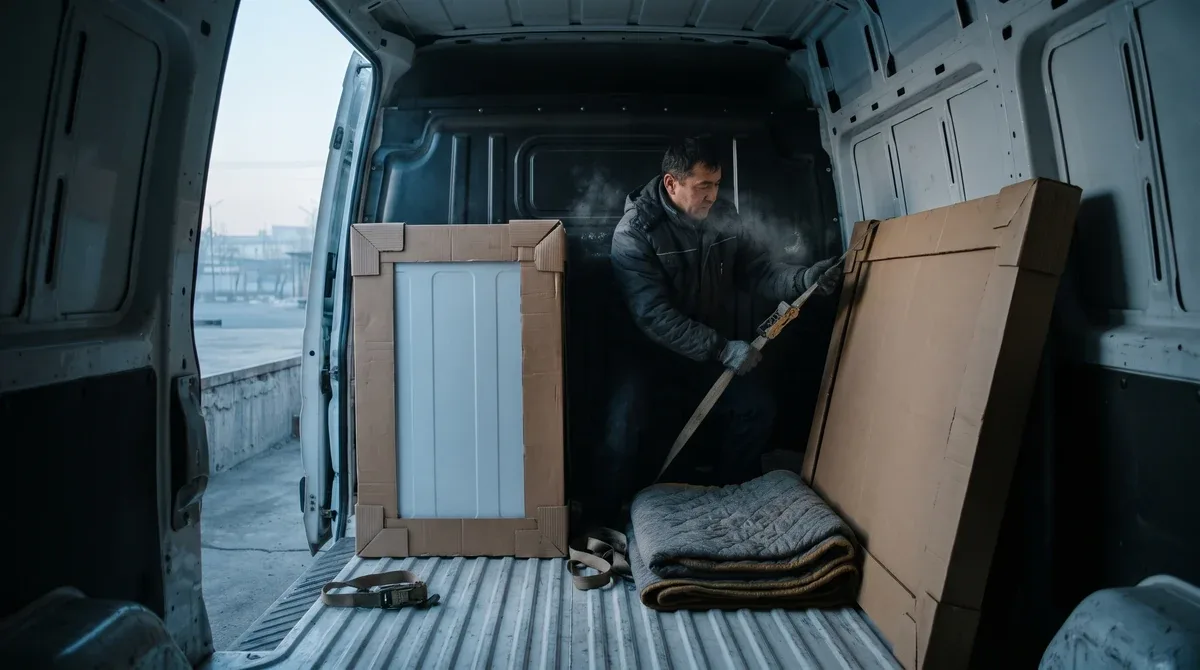
A large item gets handled several times on its way, sometimes laid on its side. Good packaging expects that.
- Corners. Most damage happens at the corners. Use cardboard or foam corner guards.
- Heavy board. For heavy goods use five-layer corrugated board; three-layer board tears quickly.
- Internal bracing. The item must not shift inside. Fill gaps with foam or cardboard.
- Handling marks. "This side up", "fragile", "do not lay flat", plus marked grip points.
- Multi-box shipments. If a wardrobe ships in two or three boxes, label each with the SKU and "1/3, 2/3". Check in advance whether the platform accepts multi-piece shipments.
Before launch, run one simple test: drop the box corner-first from knee height. If the item inside suffers, it will suffer on the road too.
What to do when goods arrive damaged
You can recover money for damage, but only with evidence. And evidence is collected before dispatch.
- Before dispatch — photograph the item and the sealed box from every side.
- At handover — the acceptance document should record the number of pieces and box condition.
- On return — open the box on camera. Record the damage before cutting through it.
- Claim — file it through the seller account within the deadline set in the seller agreement.
How to write a claim for lost or damaged stock is explained in getting compensation for lost marketplace goods.
Keep in mind: if packaging did not meet the requirements, liability usually falls on the seller. Have you ever seen an intact box with shattered glass inside? That usually points to weak internal bracing.
Assembly: what buyers expect
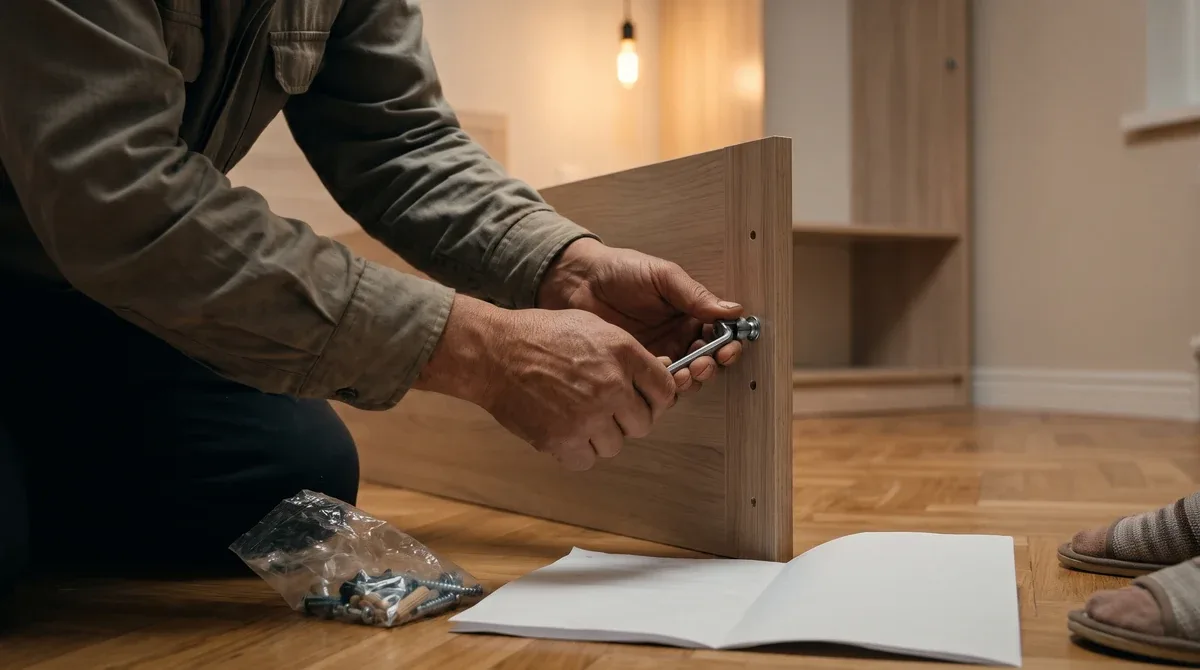
Someone who buys a wardrobe or a bed asks one question first: "Who will put it together?" If the card has no answer, they go to another seller or send the item back.
You can handle assembly in three ways:
- Self-assembly. Clear instructions, numbered parts and a short video. All fittings in one bag, in one box.
- Partner installers. Agree with installers in the main cities and state the price on the card.
- Assembly included. Convenient for premium items, but you must deliver it in every region you sell to.
Check the help centre for how the platform lets you offer such a service. Contacting buyers outside the platform is restricted in many cases.
If you manufacture furniture yourself, tracking parts, fittings and orders is a separate topic, covered in software for furniture manufacturing.
A hypothetical calculation: what one sofa leaves you
The figures are hypothetical and only show the logic. The sofa sells for 6,000,000 UZS and costs 3,600,000 UZS to make. Commission at 15% is 900,000 UZS. Delivery is 250,000 UZS and packaging 120,000 UZS.
One successful sale leaves: 6,000,000 − 3,600,000 − 900,000 − 250,000 − 120,000 = 1,130,000 UZS.
Now assume one order in ten comes back damaged. Return shipping is another 250,000 UZS and repairs 400,000 UZS. Those 650,000 UZS spread over ten sales add 65,000 UZS to each. If the returned sofa can only be resold at a discount, the loss grows further.
In other words, returns quietly take 65,000 UZS from every sale, roughly 6% of the margin. Cut the return rate from one in ten to one in twenty and you win half of that back without touching the price; better packaging and delivery terms are enough.
Checklist before listing a bulky item
- Have you measured the packed box and entered the correct dimensions and weight?
- Have you calculated the cost per order using volumetric weight and the platform tariff?
- Have you chosen FBO, FBS or DBS for each SKU separately?
- Are corners protected, the item braced and the drop test passed?
- Do you have a photo routine before dispatch?
- Have you stated how far delivery goes and who pays for carrying upstairs?
- Are assembly instructions and the fittings kit ready?
- Are return and damage costs built into the price?
Conclusion
With bulky goods, margin is lost on the road, not at the price tag. Calculate volumetric weight, because it often exceeds actual weight. Choose the model per product and deliver yourself where it makes sense. Treat packaging as a protection system and collect evidence before dispatch. Settle the assembly question before the buyer asks. Get these five things right, and fewer sofas come back while more of the margin stays with you.
Frequently asked questions
What counts as a bulky item on a marketplace?
Anything that, by size or weight, cannot go through the standard sorting line: sofas, wardrobes, washing machines, fridges, bicycles. Each platform sets its own threshold and revises it from time to time. Take the exact centimetres and kilograms from the seller agreement (public offer) and help centre in your seller account.
Which model works best for furniture: FBO, FBS or DBS?
There is no single answer. Fast-moving items in compact packaging can sit in the platform's warehouse (FBO). Expensive, fragile or slow-moving items are often cheaper to keep in your own warehouse and sell via FBS, or via DBS where you deliver yourself. Model logistics, storage and returns for each SKU separately.
Can I get compensation if an item is damaged in transit?
Often yes, if you can show the damage happened while the platform was responsible and your packaging met its requirements. You need photos before dispatch, the handover document and a damage report on receipt. Watch the claim deadline stated in the seller agreement.
Should assembly be included in the price?
Buyers prefer a known price up front. You can bundle assembly into the price or offer it separately, but the terms must be stated clearly on the product card. Line up installers city by city in advance, or the promised service will not happen.
Do you know what each bulky order really leaves you?
We can put logistics, packaging, damage and returns for every SKU into one sheet and see which products earn money and which ones mostly pay the carrier.