Information as of November 2026.
Korean products are everywhere in Tashkent. Uzbek-built cars on the streets trace back to a 1990s Korean joint venture, and Korean equipment fills factories and hospitals. Yet sales are almost one-way: in the first seven months of 2026, Uzbekistan bought USD 1,037 million of Korean goods and sold Korea only USD 37.5 million (National Statistics Committee). For a Korean exporter that gap is a signal. Buyers already trust Korean quality, and the government wants more of it made locally.
This article shows where that demand sits, which rules apply to you, and what to check before you sign. It is part of the guide to doing business in Uzbekistan and is written for owners and overseas business teams of Korean companies.
Uzbekistan and Korea in numbers
- Bilateral trade — Value: about USD 1.7 billion, 2.1% of Uzbekistan's foreign trade; Period: 2025; Source: National Statistics Committee
- Bilateral trade — Value: USD 1.1 billion; Period: Jan–Jul 2026; Source: National Statistics Committee
- Imports from Korea / exports to Korea — Value: USD 1,037 million / USD 37.5 million; Period: Jan–Jul 2026; Source: National Statistics Committee
- Enterprises with Korean capital — Value: 683 (182 joint ventures, 501 fully foreign-owned); Period: 1 Dec 2025; Source: National Statistics Committee
- Enterprises with Korean capital — Value: 730; Period: 1 Aug 2026; Source: National Statistics Committee
- Korean investment and loans in fixed capital — Value: USD 216.4 million; Period: Jan–Jun 2026; Source: National Statistics Committee
- Korean investment attracted, cumulative — Value: more than USD 10 billion, of which about USD 8 billion direct; Period: Sep 2026; Source: UzA, national news agency
What do the numbers tell you? Korean companies are present but not crowded. Compare 730 Korean-capital firms with more than 6,600 Chinese-capital firms on 1 October 2026 (National Statistics Committee). The Korean group is spread across industry (142 firms), trade (129), construction (54), hotels and restaurants (47) and healthcare (15), as of 1 December 2025.
Political ties are also active. The two presidents signed a Joint Declaration on Special Strategic Partnership on 19 April 2019 (UzA). During the state visit to Seoul on 14 September 2026, the sides said projects worth about USD 12 billion had been prepared (Kun.uz). On 15 September, Uzbekistan's president backed a new USD 8 billion partnership programme with the Export-Import Bank of Korea, covering transport, healthcare, critical minerals and digital technologies (president.uz). These are plans, not contracts, but they show where state money will flow.
The rules that apply to a Korean company
No free trade agreement. The Trade and Investment Promotion Framework (TIPF), signed in Seoul in September 2023, is non-binding (Korea Times, citing Korea's trade ministry). It sets up dialogue on supply chains, digital trade and biotech, but cuts no tariffs. Uzbekistan is still negotiating WTO accession, so check the duty on your HS code, the international product code, before pricing.
Also read Investment Incentives in Uzbekistan: Free Economic Zones, Small Industrial Zones and Investment AgreementsTax treaty. Domestic withholding tax on payments abroad is 10% on dividends and interest and 20% on royalties. The Uzbekistan–Korea treaty lowers these: 5% on dividends for a parent holding at least 25% directly, 5% on interest, and 2% on royalties for a holder of at least 20%, otherwise 5% (PwC Worldwide Tax Summaries, reviewed 27 August 2026). For a parent below 25%, the treaty rate is 15%, so the domestic 10% applies. The royalty saving is the big one if you license technology or a brand.
Travel and work. Korean citizens can stay up to 30 days without a visa (Ministry of Foreign Affairs of Uzbekistan). Address registration is due within three working days of arrival (Law LRU-1074); hotels handle it. Running your local subsidiary as director still needs a work permit.
Documents and disputes. Korea and Uzbekistan are both parties to the Hague Apostille Convention (HCCH), so Korean corporate papers need an apostille and a translation, not consular legalisation. Both are also parties to the 1958 New York Convention, which lets an arbitral award from one country be enforced in the other (UN Treaty Collection).
Automotive and transport equipment
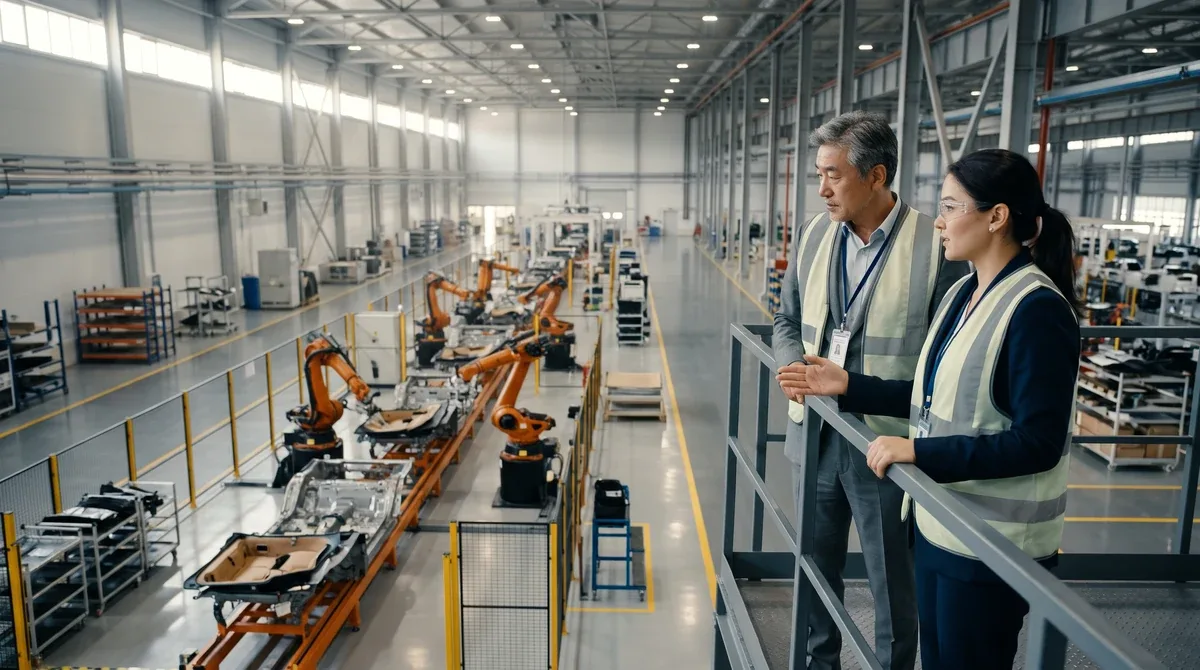
The Asaka car plant opened on 19 July 1996 as UzDaewooauto, a joint venture with Daewoo (UzA). That history explains why Korean engineering standards are familiar to Uzbek plants and suppliers. Korean rail technology is the newer story: the first Hyundai Rotem train began service on the Tashkent–Khiva route on 3 May 2026 (Kun.uz).
For a Korean tier-2 or tier-3 supplier, the practical openings are:
- local production of components now imported, from wiring and plastics to seats and glass;
- tooling, moulds, robots and maintenance for assembly lines;
- service and spare-parts networks for rolling stock and buses.
Local content requirements, customs duties and the main buyers are covered in the automotive industry in Uzbekistan.
Healthcare, medical devices and pharmaceuticals
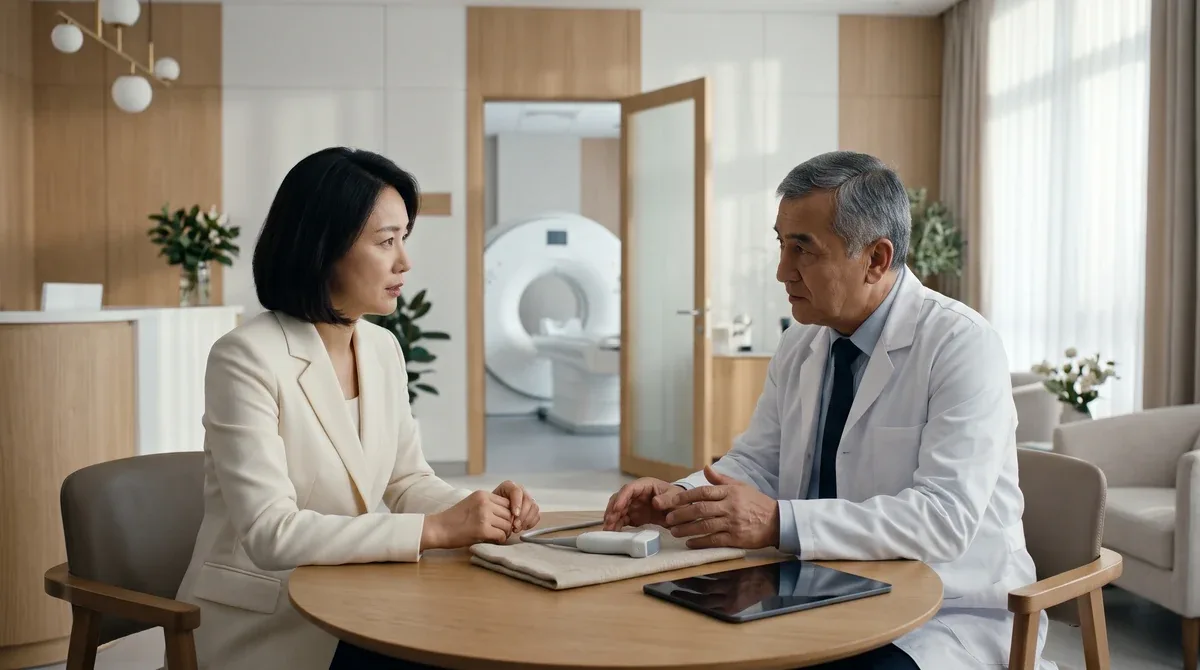
Healthcare is where Korean credentials open doors fastest. Since 1 October 2025, a medicine registered by a WHO-Listed Authority is registered in Uzbekistan by recognition (Decree UP-137). Korea's MFDS was among the first three regulators to receive that WHO status, in October 2023 (WHO). A later decree, UP-191 of 10 September 2026, amended this part, so check the current wording on lex.uz.
Korean money is already in the sector. Korea's deputy prime minister said in May 2026 that Kyeryong is carrying out a USD 150 million medical cluster, and the Export-Import Bank of Korea portfolio includes a multi-profile clinic and a pharmaceutical park (Kun.uz). For private clinics, diagnostic centres and device distributors, see the private healthcare market in Uzbekistan.
Textiles, minerals and other openings
An Uzbek-Korean textile technopark is being prepared as a joint project (Times of Central Asia). Uzbekistan has its own cotton and wants more finished goods made at home. That creates demand for Korean dyeing, finishing and knitting machinery, and for partners in technical fabrics. The value chain is described in the textile industry in Uzbekistan.
Critical minerals, transport infrastructure and digital government are the other priorities named for the Eximbank programme (president.uz). Most of these are large state projects. A mid-sized firm usually enters as a subcontractor or equipment supplier to the main contractor.
A hypothetical scenario: a parts supplier from Ulsan
Imagine a Korean maker of plastic interior parts. It ships to a customer in Uzbekistan and pays duty and a long freight bill on every container. The customer asks: can you produce here?
A sensible path takes three steps. First, the company sets up a small local LLC with a Korean director on a work permit and an Uzbek finance manager. Second, it leases a building in an industrial zone and installs a few presses, keeping complex tooling in Korea. Third, it licenses its process to the local entity, paying 2% treaty withholding on royalties instead of 20%.
The weak points are predictable. Payments arrive in soums. Acceptance acts must be signed for every batch. Production costs need to be tracked per part from day one, which is what ERP for manufacturing is built for. Would your own team be ready to manage these three points from Seoul?
How it differs from home (Korea)
- Corporate income tax — Korea: 10% / 20% / 22% / 25% by income band from 2026, plus 10% local income tax (EY, January 2026); Uzbekistan: 15% base rate
- VAT — Korea: 10% (PwC, reviewed June 2026); Uzbekistan: 12%
- Currency and payments — Korea: Free won convertibility; Uzbekistan: Bank checks contracts and acceptance acts before converting soums
- Trade framework — Korea: Wide FTA network; Uzbekistan: Not yet a WTO member; no FTA with Korea
- Language of business — Korea: Korean; Uzbekistan: Uzbek and Russian; contracts often bilingual
- Holidays — Korea: Seollal, Chuseok; Uzbekistan: Lunar New Year is not a holiday; Navruz and the two Eids are
Decisions in Uzbek companies often rest with the owner, not a committee. A meeting with the right person can move faster than in a Korean group, while a meeting with the wrong person goes nowhere. There is also a long-settled ethnic Korean community, the Koryo-saram. Many speak Russian rather than Korean, so do not plan on a Korean-speaking team by default.
Risks and a checklist before you sign
The main risks are a currency that is not yours, slow payments from local buyers and rules that change quickly. Before signing with a partner:
- ☐ Check registration, owners, tax debts and court cases of the partner.
- ☐ Write roles, contributions and exit terms into any joint venture agreement.
- ☐ Fix the currency, payment schedule and late-payment penalty.
- ☐ Ask for prepayment or a bank guarantee on first deliveries.
- ☐ Choose governing law, contract language and an arbitration forum.
- ☐ Get a Korean tax residence certificate before the first dividend or royalty.
Summing up
Uzbekistan buys a lot from Korea and sells it very little, and that imbalance is your opening. The clearest openings are in car parts, healthcare and textile machinery, plus supplies to large state projects funded through Korean institutions. The tax treaty helps most on royalties. There is no FTA, so duties and payment terms decide your margin. Start with one product, one reliable partner and a contract that says exactly how and when you are paid.
Statistics are the latest published figures of the agencies named and may be revised. This article is general information, not legal or tax advice; check the current rules on lex.uz and confirm your case with a licensed local lawyer and tax adviser.
Frequently asked questions
How many companies with Korean capital operate in Uzbekistan?
683 on 1 December 2025, of which 182 were joint ventures and 501 fully foreign-owned, and 730 on 1 August 2026 (National Statistics Committee). The largest groups by activity were industry (142) and trade (129).
Is there a free trade agreement between Korea and Uzbekistan?
No. The two countries signed a Trade and Investment Promotion Framework (TIPF) in Seoul in September 2023, but it is a non-binding framework for cooperation, not a tariff agreement (Korea Times, reporting Korea's trade ministry). Uzbekistan is also not yet a WTO member, so import duties follow its national tariff.
Do Korean citizens need a visa for Uzbekistan?
Not for short trips. Holders of ordinary Korean passports can stay up to 30 days without a visa, counted from the border crossing (Ministry of Foreign Affairs of Uzbekistan). Address registration is due within three working days; hotels do it automatically. Working for a local company, including as director of your own subsidiary, needs a work permit.
What withholding tax applies to dividends and royalties paid to a Korean parent?
Domestic rates for non-residents are 10% on dividends and interest and 20% on royalties. Under the Uzbekistan–Korea tax treaty, dividends can fall to 5% if the parent directly holds at least 25% of the capital (otherwise the domestic 10% applies, as the treaty rate is 15%), interest to 5%, and royalties to 2% with a holding of at least 20% or 5% otherwise (PwC Worldwide Tax Summaries, reviewed 27 August 2026). A Korean tax residence certificate is needed.
Where are the clearest openings for a mid-sized Korean company?
Supplying and localising parts for the car industry, medical equipment, clinics and pharmaceuticals, textile finishing and machinery, and services around large state-backed projects in transport, critical minerals and digital government. Each depends on a reliable local partner and careful payment terms.
Planning a Korean project in Uzbekistan?
A short call can help you test your sector against current data, choose between export, a distributor or your own entity, and prepare the questions for a local lawyer before you sign.