
In the evening a driver comes back and says, "Four bottles didn't come back today." Nobody remembers which homes kept them. Which office still owes for last month is written in a different notebook. Tomorrow the dispatcher will again phone around asking customers whether they need water.
Does this sound familiar? Delivering 19-litre water looks like a simple business: fill, deliver, collect payment. In practice every delivery moves three ledgers at once: water, bottles and money. Whether you run a local bottler or are entering the Uzbek market with your own brand, this article shows what water delivery software should track, where money leaks most often, and where to start.
Why notebooks and spreadsheets stop working so quickly
At first everything fits in one notebook. Once you pass a hundred or so customers, the records split up: orders sit with the dispatcher, debts with the owner. Bottles are often not recorded anywhere. They live in the driver's memory.
The problem is that these three records depend on each other. A customer gets water, so a bottle leaves, and either debt grows or cash comes in. Keep them in three places and by evening they never fully agree.
Any automation starts here: find the process that loses the most, then move it into a system. The sequence is covered in detail in the main guide to business process automation. In water delivery, bottle tracking comes first.
Bottle tracking: how many bottles sit with each customer
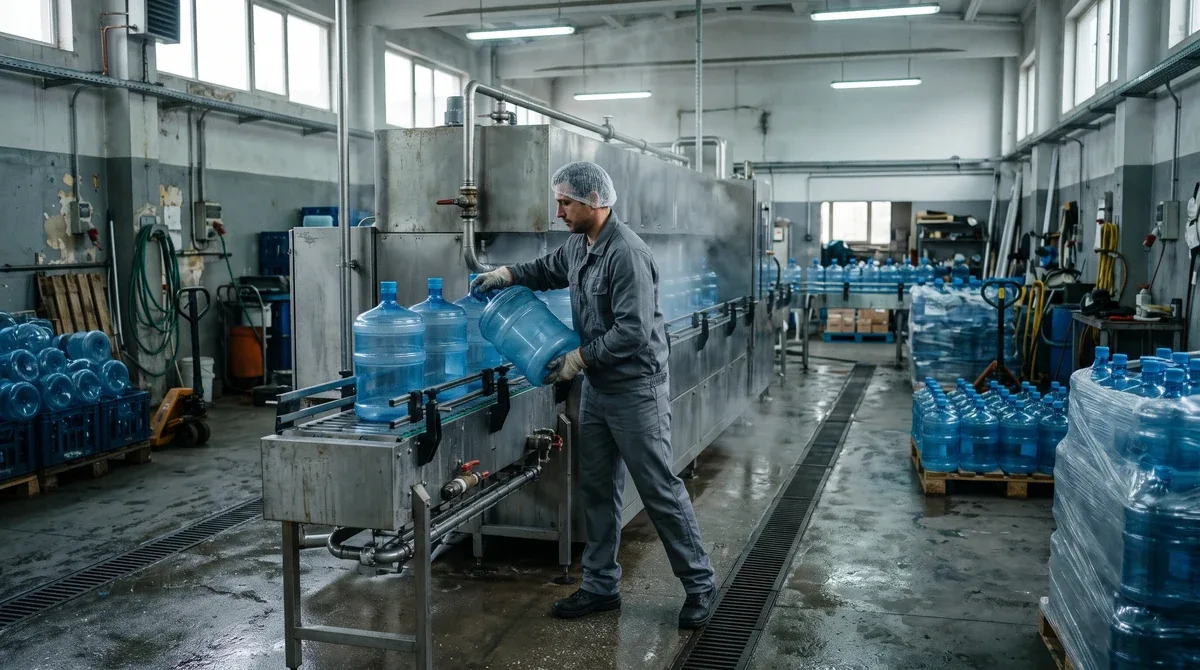
The bottle here is the reusable 19-litre container, often called returnable packaging. It is not a trivial item. It is working capital that circulates between your workshop and your customers. When a customer receives a full bottle, they should hand back an empty one. If they do not, bottles slowly pile up in homes and offices.
Also read You Took In 1,000 Litres of Milk and Got Less Curd Than Planned: Where Dairy and Meat Plants Lose YieldMany companies charge a bottle deposit. That is money the customer leaves when they first receive a bottle. When the bottle comes back, so does the deposit. It is not revenue, so record it separately from water sales.
Each customer card should show three numbers:
- how many bottles the customer holds right now;
- how many of those are covered by a deposit;
- how many full bottles were delivered and how many empties collected last time.
A hypothetical example. A customer holds 2 bottles, both covered by a deposit. The driver brings 3 full ones and collects 1 empty. The system works it out: the customer now holds 4 bottles, and 2 of them have no deposit. The dispatcher sees this at once and reminds the driver to collect the extra bottles next time.
The workshop needs the same record. How many empties arrived for washing, how many were filled, how many were written off as unusable. In the evening, "dispatched minus returned" is checked against the total across customer cards. If there is a gap, it is a one-day gap, not a one-month one.
One more detail is bottle age and condition. Bottles are washed and refilled again and again, and over time they cloud or crack. If write-offs are logged separately, you know in advance how many new bottles to buy each month. You also see which customers return damaged bottles more often, which gives you grounds to revisit deposit terms.
Subscriptions and orders: don't wait for the customer to call
A subscription is a regular delivery agreed with the customer, for example 2 bottles every Monday. Water is consumed constantly, so many customers move to a subscription easily.
The subscriber card holds delivery days, usual quantity, address, a landmark and a convenient time window. Every day the system builds tomorrow's list on its own. The dispatcher only enters changes: someone is away, someone needs an extra bottle.
A similar approach works for customers without a subscription. The system knows their usual consumption. Say a family takes one bottle every 7–8 days. If there is still no order on day 9, a reminder appears for the dispatcher. One call can bring the customer back before they switch to another supplier.
For offices, the monthly invoice matters. All deliveries for the month are rolled into one bill. How automatic recurring charges are set up is covered in the article on subscription and recurring billing.
Routes and the driver's phone
A route is the order of addresses a driver covers in a day. Water is heavy and van capacity is limited. So routes are planned not only by distance but also by load: how many full bottles go out and how many empties are expected back.
A simple, reliable approach is to split routes by district first. Each driver gets to know their area: which building has a broken lift, which office only accepts deliveries before lunch. Keep those notes on the customer card and a new driver will not get lost on day one.
The driver does not need a complex app. Three buttons are enough:
- Delivered: how many full bottles handed over, how many empties collected.
- Payment: cash, card or on credit.
- Not delivered, with a reason: nobody home, address not found, rescheduled.
If the driver records this at every stop, bottle balances and debts update immediately. Instead of "four bottles didn't come back", the evening brings an exact list: which customer, which address. Managing couriers, statuses and courier cash is covered in detail in the article on running your own delivery team in a system.
The day is closed twice. In the morning, the system records how many full bottles the driver took from the workshop. In the evening, the driver hands in empties, undelivered full bottles and cash. The system checks this against the phone entries and shows any gap on the spot, so neither the driver nor the cashier has to argue about it the next day. If the same driver keeps showing a gap, you will see it within a week rather than at the end of the quarter.
Receivables: water debt and bottle debt are separate
Receivables are what customers owe you: they took the water but have not paid yet. In water delivery there are two kinds of debt, and they should never be mixed.
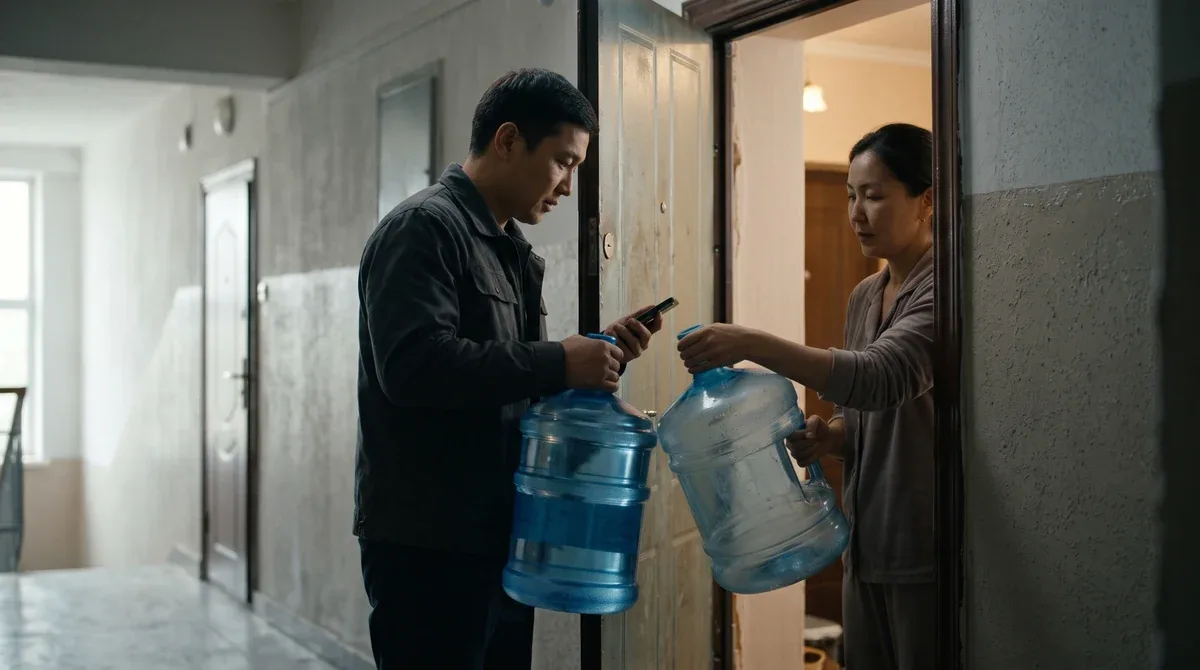
The first is money. An office pays at month-end, a household says "I'll pay next time". The second is bottles. The customer has paid but keeps extra bottles at home. Money debt shrinks your cash. Bottle debt shrinks your bottle stock, and you end up buying new ones.
Have the system show both in one report:
- Office A (hypothetical) — Money owed: 3 months of deliveries; Extra bottles: 0; Last payment: 40 days ago; Status: Over limit
- Household B (hypothetical) — Money owed: none; Extra bottles: 3; Last payment: 5 days ago; Status: Collect bottles
- Shop C (hypothetical) — Money owed: 1 week of deliveries; Extra bottles: 2; Last payment: 10 days ago; Status: Normal
Give each customer a limit: how much debt and how many extra bottles are acceptable. A customer over the limit does not get a new delivery scheduled automatically; a manager decides first. Setting limits, terms and automatic reminders is explained in the article on accounts receivable control.
Rollout: where to start
You do not need to change everything in a day. This order lets you switch without stopping work:
- Bring the customer base into one place. From notebooks, spreadsheets and phone contacts. Each customer gets an address, phone number and type: household, office or shop.
- Count the bottles. In the workshop, in the vans and at customers. For a week, drivers confirm the customer counts at every delivery.
- Reconcile debts. Enter each customer's opening balance and agree it with them.
- Move drivers to phones. Run paper and phone in parallel for the first week, then drop the paper.
- Separate subscribers. Put regular customers on a subscription and switch on the automatic daily list.
- Add a weekly review. Every Monday: bottle discrepancies, debts over limit and customers who have not ordered for a while.
That last list deserves attention. In water delivery, keeping an existing customer is usually cheaper than finding a new one. How to work with customers who have gone quiet is covered in the article on customer retention and loyalty programmes.
Summary
In 19-litre water delivery, money leaks in three places: bottles that never come back, forgotten debts and customers nobody reminded in time. Notebooks and spreadsheets record each of these separately but cannot connect them.
In a good system every delivery updates three records at once: bottle balance, money and customer history. The driver confirms on a phone, the dispatcher gets tomorrow's list ready-made, and the owner sees debts and bottle gaps in a weekly report. One question is enough to start: do you know exactly how many of your bottles are sitting with customers today?
Frequently asked questions
Does a small operation with two or three vans really need software?
Not a complex system, but three things must live in one place: the customer card, the number of bottles each customer holds, and their debt. If drivers confirm deliveries on a phone, the evening reconciliation takes far less time than it does with a notebook.
What happens if a customer breaks or loses a bottle?
Put it in the contract up front: if a bottle is lost or damaged, the customer forfeits the deposit or pays for the bottle. In the system this is a separate transaction, so both the bottle count and the money stay correct.
Is a bottle deposit revenue or a liability?
A deposit is money the customer leaves as security for the bottle. It is not revenue: when the bottle comes back, the deposit is returned. Keep deposits separate from water sales, or the cash desk will appear to hold money you do not actually own.
How do I control debts from offices that pay at month-end?
Give each office a credit limit and a payment term. The system adds to the debt with every delivery and sends a reminder as the due date approaches. A customer over the limit does not get a new delivery scheduled without a manager's approval.
Want a second pair of eyes on your water delivery records?
In a short call we will look at how bottles, subscribers and debts are tracked today and suggest the most sensible place to start. Free and with no obligation.