
ERP cost is not a single number: it is the sum of one-off build or licensing, implementation, and recurring cost of ownership. The biggest drivers are the number and depth of modules, how specific your processes are, integrations with local systems, data migration and the number of user roles. A serious answer to "how much will an ERP cost us in Uzbekistan?" therefore starts with a requirements list, not a price list. This article breaks down the cost structure, gives you a method to rebuild any estimate yourself, and shows how to compare local proposals on equal terms.
When a custom system makes sense at all and how it is built is covered in the main guide, custom ERP development in Uzbekistan. This piece focuses on the money.
Why there is no "average price"
An ERP is not a boxed product. It is a mix of software and services, and the scope behind the same label can vary enormously.
Picture two entities that both ask for "inventory and sales". The first has one warehouse, one price list and cash sales. The second has five branches, field sales agents, customer-specific pricing, credit sales, returns and a sync with 1C for statutory accounting. Same label, a several-fold difference in work.
For a foreign company this is doubly important. Benchmarks from your home market or from global ERP rollouts rarely transfer. Local rates, local integrations and local regulatory requirements change the picture. Work from cost drivers, not from someone else's headline figure.
The three layers of cost
When preparing a budget for headquarters, split ERP costs into three layers. Many teams only present the first and then face awkward follow-up requests.
Ayrıca okuyun Kur Oynadı, Fiyatlar Üç Yerde Üç Farklı: ERP'de Fiyat Listesi Yönetimi- Build or licence — What it includes: Discovery, design, development, testing, configuration; When it is paid: During the project
- Implementation — What it includes: Data migration, training, parallel run, user guides; When it is paid: Around go-live
- Ownership — What it includes: Hosting, backups, support, upgrades, ongoing development; When it is paid: Monthly or annually
The third layer is the one most often missed. After go-live the business keeps changing: a new branch, a new pricing policy, a new tax or e-invoicing requirement. Each change is additional work.
How to compare options on total cost of ownership is shown in global ERP, 1C or custom ERP in Uzbekistan.
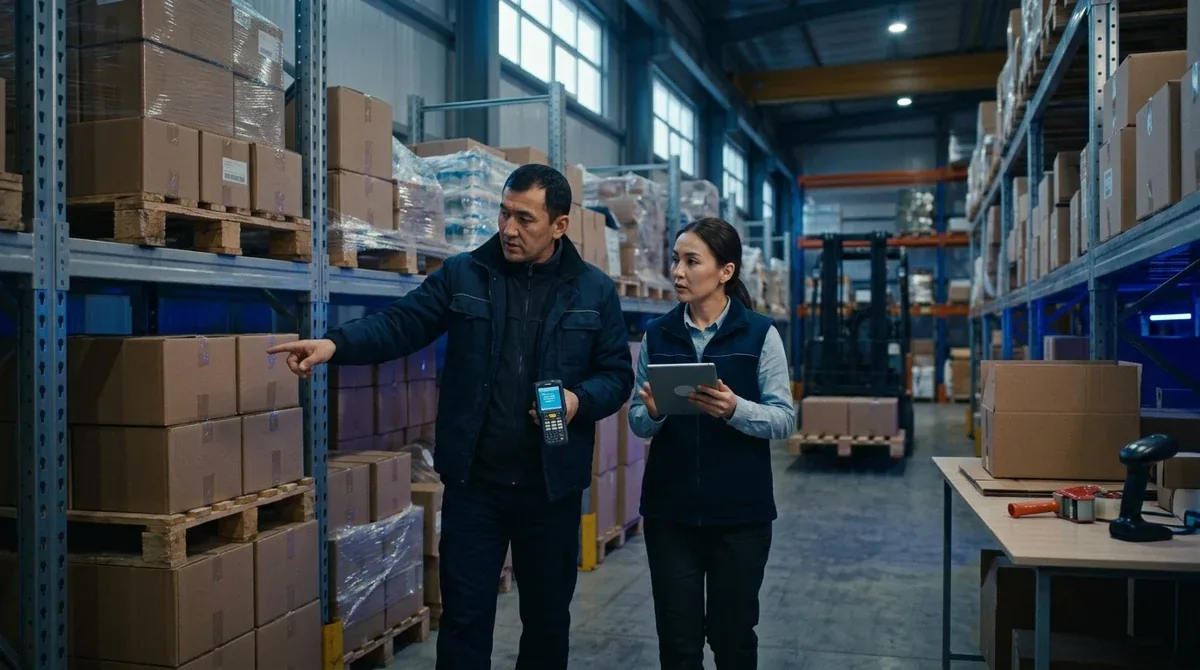
8 factors that drive ERP cost
1. Number and depth of modules
Sales, inventory, procurement, production, cash, HR: each is a module. Depth matters as much as count. "Inventory" can mean simple receipts and issues, or it can mean batches, expiry dates, stocktakes and transfers across several warehouses.
2. Complexity of business rules
Rules, not screens, usually drive cost. Customer-type discounts, agent bonuses, credit limits, approval chains: every "if…, then…" condition adds development and testing time. More rules mean more ways to fail, which means more testing.
3. Local integrations
A typical list in Uzbekistan includes 1C for statutory accounting, an electronic invoicing operator, local payment systems such as Payme and Click, banks, online cash registers, marketplaces and a Telegram bot. If you also need to feed a group-level ERP or BI system, add that too. Each integration is a small project in its own right. Its cost depends on whether the external system offers a usable API, how good the documentation is (often available only in Russian or Uzbek), and which way the data flows.
4. User roles and interfaces
Country manager, accountant, warehouse staff, field agent, courier: each needs different screens and permissions. A mobile app for agents, a Telegram bot for couriers and a dashboard for management are three separate interfaces. Language matters as well: local staff may need Uzbek or Russian, while headquarters expects English reports.
5. Data migration
Legacy spreadsheets, a 1C database, debts tracked on paper. The messier the data, the longer cleaning and migration take. This work needs your local team's involvement, because only they know which record is correct.
6. Reports and analytics
Every report is a query, filters and a layout. Ten simple tables and a consolidated management dashboard are very different amounts of work. Agree early which figures headquarters and local management actually need. Understanding how management accounting (P&L and cash flow) is structured helps keep this list short.
7. Security, data residency and reliability
Role-based access, audit logs, backups, concurrent use across branches. Uzbekistan's personal data legislation also contains localisation requirements for data on Uzbek citizens, which can affect where the system is hosted. Confirm the current rules with your legal advisers before choosing infrastructure. This part is invisible to users, but cutting corners here costs more later.
8. Clarity of requirements and timeline
Vague requirements are the largest hidden cost driver. When scope is unclear, a vendor either prices in contingency or bills change requests along the way. Compressed timelines also raise cost, because parallel work needs a bigger team. How to write requirements that vendors can price accurately is covered in writing an ERP technical specification.
The estimation method: rebuild the budget yourself
To understand a vendor's estimate, rebuild it with the same logic. The core formula is simple:
Build cost = (total hours for all work items + contingency) × hourly rate
First-year cost = build + implementation + 12 months of ownership costs
In practice, follow this sequence:
- List your processes. Note the process owner and the number of users for each.
- Group processes into modules. For each module, count screens, business rules and reports.
- Put integrations on separate lines. Do not bury them inside modules; they generate the most surprises.
- Ask for hours per line. Not just a total, but an hour-level breakdown.
- Add implementation work. Data migration, training, parallel run.
- State ownership costs annually. Hosting, support and a reserve of hours for further development.
For example, suppose the sales module is planned with 6 screens, 10 business rules and 4 reports. If a vendor allocates twice the hours you expected, ask which part takes that long. The answer may be perfectly reasonable, for instance a complex pricing policy. But the question surfaces hidden complexity before the contract is signed.
Use this table as a budgeting template:
- Discovery and design
- Module: …
- Integration: …
- Data migration
- Testing and fixes
- Training and go-live
- Contingency
- Annual support

Commercial models: which fits when
- Fixed price. Works when requirements are clear and stable, and is often easiest to get approved at headquarters. The downside: every change needs a separate agreement and extra payment.
- Time and materials. Fairer when requirements are still forming. The downside: it needs constant attention from your side, with weekly reporting and a prioritised backlog.
- Phased delivery. The most painful module first, then the rest. Each phase is estimated and accepted separately. For most mid-sized entities this is the most balanced option.
- Subscription. Typical for packaged software and support contracts. Compare the multi-year total against the other options.
Also clarify the contract currency and how payments to a local vendor will be made. This affects budgeting at group level, not the scope of work.
How to reduce cost without cutting quality
- Narrow the first phase. Start with the process where your entity loses the most time or money today.
- Keep standard functions in standard tools. For example, statutory accounting stays in 1C while operations run in a dedicated system.
- Clean your data before migration. Removing duplicates and obsolete records yourselves cuts vendor hours.
- Appoint one decision-maker locally. Disagreements between headquarters and the local team always turn into rework.
- Limit the number of reports. Start with the five to seven figures management genuinely reviews every week.
Saving money and getting a return are linked: the goal is not the cheapest system but the one that pays back fastest. How to calculate that is covered in ERP return on investment.
Checklist for comparing proposals
- ☐ The proposal is broken into separate lines for modules and integrations.
- ☐ Each line shows hours or scope, not just a total.
- ☐ It states clearly whether data migration and training are included.
- ☐ Testing, bug fixing and the warranty period are specified.
- ☐ Post-launch support terms and pricing are included.
- ☐ It is clear who pays for hosting and where data will be stored.
- ☐ Ownership of the code, database and servers is written into the contract.
- ☐ The process for estimating and approving changes is agreed.
- ☐ Each phase has acceptance criteria.
Conclusion
To understand ERP cost, ask "what is it made of?" rather than "how much?". Cost builds up from modules, rules, integrations, data and roles, and ownership costs follow after go-live. Write clear requirements, ask for estimates in hours and compare proposals in a single table. Your budget for Uzbekistan then becomes predictable and easy to defend at headquarters.
Frequently asked questions
Why do local vendors quote such different prices for the same ERP scope?
Usually because they are pricing different scopes. One quote covers core modules only; another includes integrations, data migration and training. Before comparing, normalise every proposal against the same line-item list: which modules, which integrations, which services are in and which are out.
Can we get a firm price before a specification is written?
Only a rough range. Precision depends on how clearly requirements are defined. With vague requirements, vendors either build in a large contingency or the price moves during the project. A short discovery phase and a written specification come first; the firm estimate follows.
Which commercial model works best for a foreign-owned entity?
It depends on how stable your requirements are and how your headquarters approves budgets. Fixed price suits clear, stable scope. Phased delivery or time and materials is fairer when requirements are still forming. In every case, insist on working software and acceptance criteria at the end of each phase.
What costs continue after go-live?
Hosting, backups, support and bug fixes, adapting to local regulatory and process changes, and new features. Budget them from day one as an annual line, ideally in the same currency your headquarters plans in.
Want a second opinion on your ERP budget for Uzbekistan?
We can review your processes and requirements together and give a neutral view of which factors will drive cost most and where scope can be trimmed without hurting quality. The consultation is free.
Book a free consultation →