
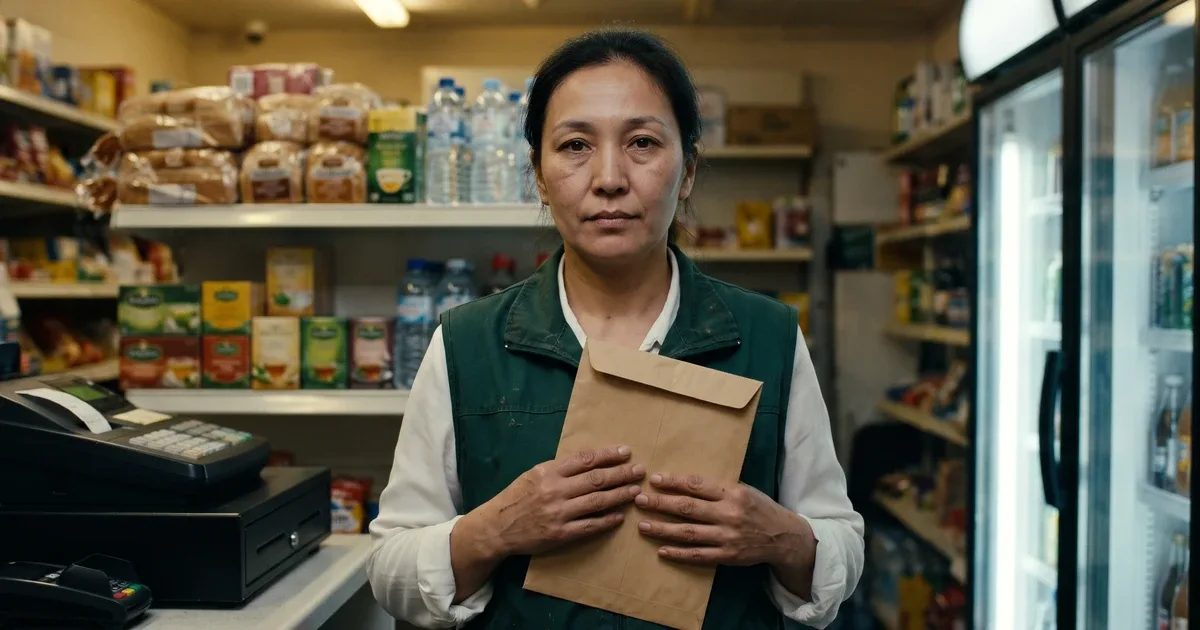
The store closes for the night. The count comes up 300,000 soums short. The morning cashier says she handed over every soum. The evening cashier says that is exactly what she received. They look at each other, and the store manager looks at both of them.
If you run stores in Uzbekistan, you will meet this scene sooner than you expect. Cash still moves through the till every day, and the problem is rarely the people. It is how the shift was handed over. This article walks through cash register control step by step: opening and closing a shift, cashier handovers, the cash limit, cash collection and what to do when the till does not balance.
The topic is one part of financial discipline for a business. That system decides where money goes. The till is where cash changes hands most often.
What cash discipline is, and how it differs from theft prevention
Cash discipline is a written routine for handling cash that people follow every day. Who opens the till and with how much, who closes it, where the cash goes and through whom. All of it is set in advance.
Theft prevention is a wider topic: stock, purchasing, fuel, discounts. It has its own guide on preventing employee theft in Uzbekistan. This article covers only the cash process.
The difference matters. Most till discrepancies come from disorder, not intent. Wrong change, an unrecorded refund, a verbal handover. A clear routine protects honest cashiers too.
Opening and closing a shift: three numbers and the Z-report
A shift opens with a float — small change for giving customers their change. Keep the float the same every day and fix it in a written order. The cashier counts it on arrival and signs for it.
Also read Agriculture and Food Processing in Uzbekistan: Fruit and Vegetables, Cold Storage, Exports and the RulesAt closing, the online register produces a Z-report. A Z-report totals the receipts issued during the shift, writes them to the register's non-erasable fiscal memory and records the shift's opening and closing times. Then three numbers are compared:
- Cash sales on the Z-report.
- Actual cash in the drawer, minus the float.
- Bank data for card terminal and QR payments.
If there is a gap, the reason is written down the same day. Not tomorrow. A cause that is not found within a day is rarely found at all.
Uzbekistan requires businesses that take cash from the public to use an online fiscal cash register (online NKM) or a virtual cash register. Each receipt goes to a fiscal data operator that feeds the tax authority's database. Under Cabinet of Ministers Resolution No. 943 of 23 November 2019, receipts can be issued offline during an outage, but the first offline receipt must be sent within 48 hours. If you plan to bring in your own POS or ERP, first confirm with the supplier that the setup is approved for use in Uzbekistan. How to link till data with stock and accounting is covered in ERP and online cash register integration.
Cashier handover: how to pass the till between shifts
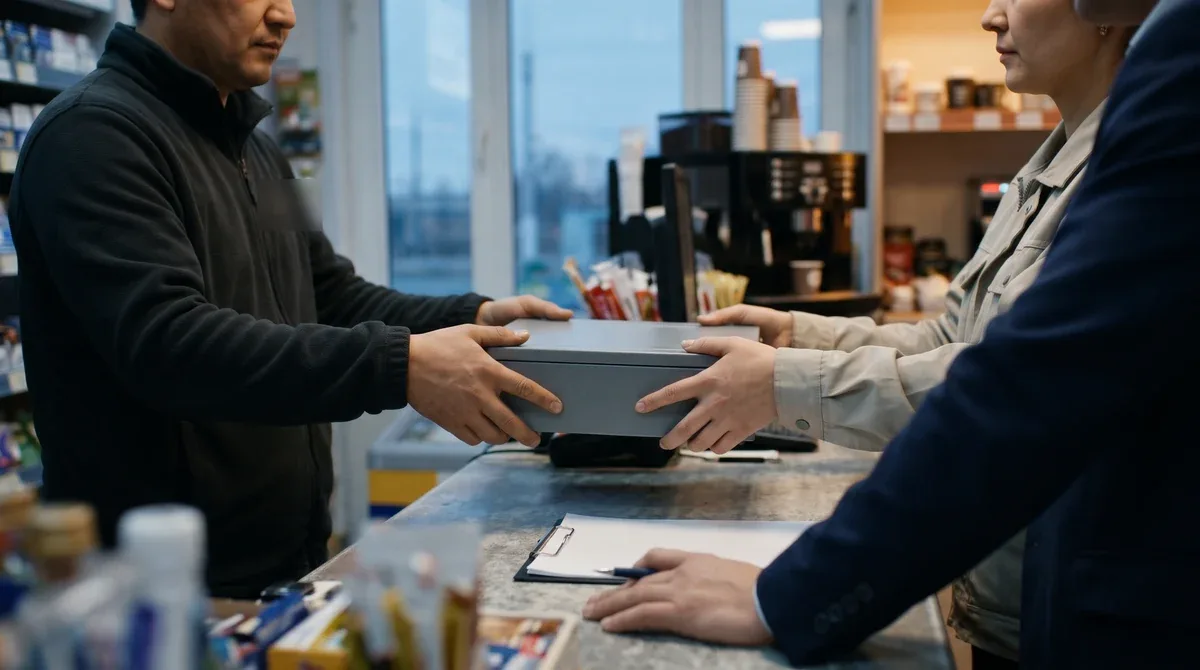
Most disputes happen mid-day, when one cashier replaces another. The rule is simple: only one person is responsible for one cash drawer at any moment.
Handover routine:
- the outgoing cashier takes an X-report (an interim report that does not close the shift);
- both cashiers count the cash together, ideally with a senior cashier or supervisor present;
- the amount goes into a shift handover record, and both sign;
- after handover, the outgoing cashier does not return to the till;
- each cashier has a personal login on the register, with no shared password.
A hypothetical example. A store has two cashiers and one till. The handover is verbal: "One hundred thousand left." If the evening count is off, the gap cannot be split between two people. Once a signed record and personal logins are in place, the gap belongs to one specific shift. The question changes from "who is guilty" to "what happened on this shift."
Round-the-clock formats, such as fuel stations, hand over three times a day. There the till, pump meters and stock have to be reconciled together, as described in ERP for a fuel station.
Cash limit, safe and cash collection
The cash limit is the maximum amount of cash that may stay on the premises overnight. Anything above it goes to the bank. This is a compliance point and a security point: the less cash sleeps in the store, the lower the risk.
Cash handling is governed by the Central Bank of Uzbekistan's rules on cash circulation, which are updated from time to time. Confirm the current requirement with your servicing bank and on lex.uz rather than copying a policy from another country.
Cash collection, often called cash-in-transit, means a specialised service takes the cash to the bank in a sealed bag. You can also deposit it yourself at a branch or a cash-accepting ATM. Either way, three rules apply:
- the bag is closed and sealed in front of the supervisor or cashier;
- the amount and seal number go into a log;
- the bank's confirmation is matched against that log every day.
Drop the habit of a local manager "taking the takings home tonight." Cash that leaves without a document disappears from the books, and the shortage is later blamed on the cashier.
Another habit to stop is paying expenses straight from the till: a supplier, a driver, lunch. By evening nobody remembers when or how much was taken. Set a rule that cash leaves the till only against an expense document signed by a manager. For small expenses, keep a separate petty cash fund with its own records. Then the sales till handles only sales, and the evening count stays clean.
Keys and the safe code belong to the same routine. Keep a written list of who may open the safe. When someone leaves, change the code the same day.
Shortage or overage: what to do
A shortage means less cash than the records show. An overage is the reverse. Both are signals. An overage most often means an unrecorded sale or a customer who got too little change.
When the till does not balance:
- Count again, together with a second person.
- Check voided receipts, refunds and terminal payments.
- Record the result: amount, date, shift, who counted.
- Ask the cashier for a written explanation. Ask, do not accuse.
- Book the overage as income and document the shortage.
If the cashier refuses to sign the record, do not argue. Note the refusal on the record itself and have another employee who took part in the count sign it.
Do not deduct a shortage from pay on your own. Material liability follows the procedure in the Labour Code. Check the specific case with a local lawyer.
Set a threshold for small differences. As a hypothetical example, a gap under 10,000 soums is logged and monitored. Above it, a manager is told at once. Even a small gap that repeats every day is not chance.

Cashier control: what to review every week
Control does not mean standing behind the cashier all day. A weekly look at the numbers is enough:
- Voided receipts — What it tells you: One cashier far above the others — ask why
- Refunds — What it tells you: Refunds with no customer at the end of a shift deserve a check
- Cash vs. card share — What it tells you: One shift with a consistently lower cash share — look closer
- Daily discrepancies — What it tells you: Do they repeat with the same cashier?
- Surprise counts — What it tells you: Once or twice a month, unannounced
A surprise count is not an accusation. It shows the routine works. The result is recorded and the cashier signs.
The till process itself needs a review too. Once a quarter, someone independent should sample handover records, the collection log and Z-reports. How to organise that is covered in internal audit for a small or mid-size company.
Cash discipline checklist
- ☐ The float amount is fixed in a written order.
- ☐ Each cashier has a personal login on the online register.
- ☐ Shifts are handed over with a signed record, two signatures.
- ☐ Every shift closes with the Z-report, cash count and bank payments reconciled.
- ☐ Any gap is recorded the same day and investigated at once.
- ☐ The cash limit is confirmed with your bank under current rules.
- ☐ Collection bags are sealed, logged and matched to the bank confirmation.
- ☐ Cash leaves the till only against a signed expense document.
- ☐ Weekly report: voids, refunds, discrepancies.
- ☐ At least one surprise count per month.
Conclusion
Look for the cause of a discrepancy in the process, not in a person. Every shift opens with a fixed float and closes with a Z-report and a three-number reconciliation. Handovers are signed, and cash above the limit goes to the bank. When a gap appears, document it the same day and find the cause without blame.
That routine protects honest cashiers and gives you a clear answer instead of an evening argument about who is at fault.
Frequently asked questions
Can we deduct a till shortage from the cashier's salary straight away?
Not unilaterally. First the shortage has to be documented: the shift handover record, the Z-report and the cashier's written explanation. Material liability and deductions follow the procedure and limits of Uzbekistan's Labour Code. Check the specific case with a local lawyer against the current text on lex.uz.
What should we do with a cash overage?
Do not hand it to the cashier or keep it aside to cover a future shortage. Record it, book it as income and look for the cause. Most often it means a sale was not rung up or a customer was short-changed.
Who sets the cash limit in Uzbekistan?
The cash limit is the maximum amount of cash that may stay in the till or safe overnight. Cash handling is governed by the Central Bank's rules on cash circulation, which are updated from time to time. Confirm how to set and agree the limit with your servicing bank and the current text on lex.uz.
Can an online fiscal register issue receipts during an internet outage?
Yes. Under Cabinet of Ministers Resolution No. 943, if data cannot be sent in real time, the receipt is issued offline. The first offline receipt must reach the fiscal data operator within 48 hours, so cashiers should report long outages to a manager immediately.
Tills not balancing in your Uzbek stores?
Let's review your shift, cash collection and reconciliation routine together and write a short procedure that local cashiers and head office both understand.