

Hypothetical example. A foreign retailer opens its first store in Tashkent. It spends heavily on fit-out, shelving and a shopfront. Eight months later, the landlord calls to say the rent is doubling. Accept it or leave. The team opens the lease: no rent review procedure, nothing about who owns the fit-out.
It is a common story. Usually the problem is not a "bad" landlord but the gaps in the lease. This article covers the clauses to agree upfront when you lease a shop, office or warehouse in Uzbekistan. At the end there is a checklist to run before signing.
A lease is one of the most expensive documents in your business legal hygiene set, because an entire site often depends on it.
Why a generic lease template is not enough
A downloaded template is usually generic. It names the parties, the premises, the rent and the term. The real risks of a commercial lease sit exactly where the template says nothing.
A commercial lease here means renting non-residential premises for a shop, office, warehouse, workshop or café. The tenant invests in the space: fit-out, equipment, signage, a customer base. A sharp rent hike or a sudden eviction therefore means losing the business, not just moving.
The economics of the site itself — footfall, rent as a share of revenue, competitors — are covered in how to choose a retail location. Here the site is chosen, and the job is to protect it on paper.
Rent, currency and the rent review clause
The rent clause should describe not only the amount but how it can change over time.
Also read Registered in Uzbekistan, but Not Yet Allowed to Start: A Guide to Licences and PermitsPin down at least four things:
- Amount and due date. In advance or in arrears, and by which day of the month.
- Currency. If the lease is in soums, the exchange-rate risk stays with the landlord. If rent is set as a "USD equivalent", the risk moves to you, which matters if your budget is in another currency. State which rate applies and on which date.
- Indexation. Indexation means raising the rent by a pre-agreed measure. For example, once a year and capped at a set percentage.
- Notice. How far in advance and in what form — letter or email — you are told about a change.
Hypothetical clause: "Rent may change no more than once a year, by no more than 10%, with at least 60 days' written notice to the tenant." With that sentence in place, the "double it in month eight" conversation becomes almost impossible.
How to agree this clause, where to concede and where to hold firm is covered in negotiation skills for business owners. One simple trade works well: you offer a longer term and reliable payment, and you get price stability in return.
Deposit, utilities and service charges
A deposit is money the landlord holds as security; its amount is a matter of negotiation. The lease should answer three questions: what can be deducted, when it is returned, and on what grounds it can be withheld.
Spell out utilities separately. Electricity, water, gas, heating, waste, security and common-area services — who pays and how it is calculated. A separate meter is best. Without one, set a formula based on floor area or usage share.
Shopping centres add a service charge for common areas. It can grow faster than the rent itself, so cap its increases too.
Repairs and improvements: who keeps what
This is where the most money is lost. First separate two kinds of repair:
- Structural repairs — roof, walls, building systems, foundations. Usually the landlord's responsibility.
- Routine repairs — painting, minor fixes, day-to-day upkeep. Usually the tenant's.
The lease can shift this, so be specific. For example: "If the roof leaks, the landlord repairs it within 10 days; otherwise the tenant repairs it and deducts the cost from the rent."
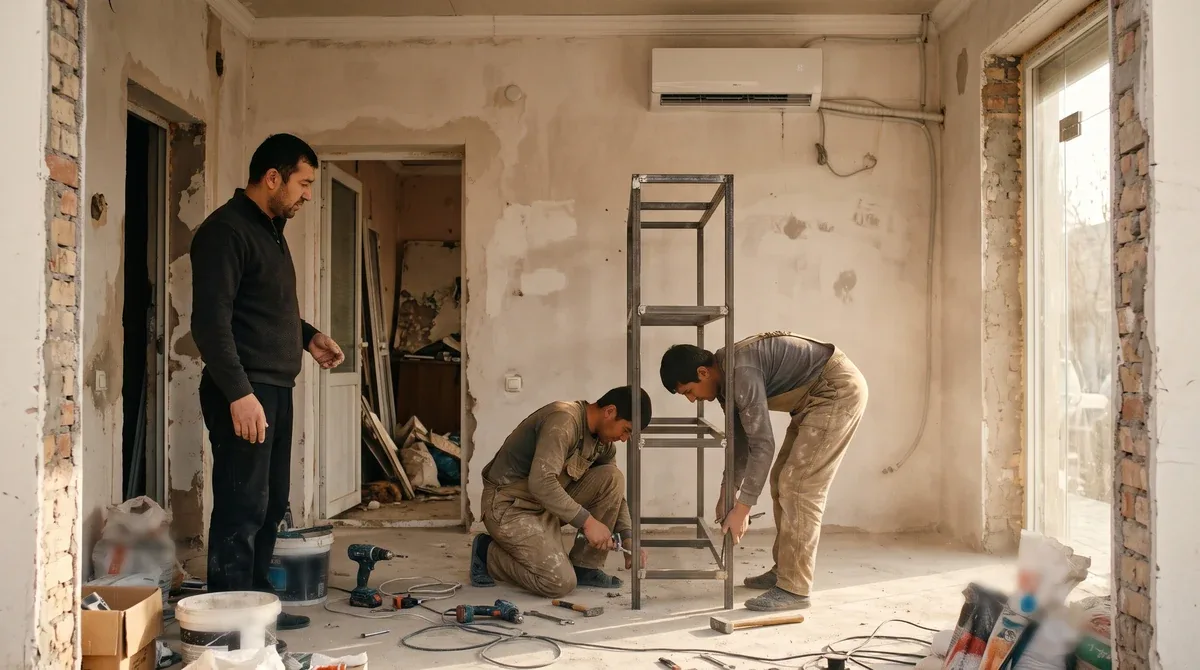
Then improvements. The lease provisions of Uzbekistan's Civil Code distinguish two types:
- Removable (separable) — can be taken away without damaging the premises: shelving, air conditioners, display units, till equipment. Usually the tenant keeps them.
- Fixed (inseparable) — built into walls, floors, wiring, ceilings. If they were made with the landlord's consent, the tenant can claim their value, unless the lease excludes this (Article 555 of the Civil Code).
The practical takeaway is simple. Get the landlord's written consent before fit-out starts. Attach the budget and a list of works that will be compensated. One option is a rent-free period in exchange for the fit-out.
A rent-free period means months without rent, or at reduced rent, while the tenant fits out the space. It is a commercial deal, not a legal entitlement, so record its length and amount.
Early exit, subletting and renewal
Business does not always go to plan. A store may underperform, or you may need more space. If the lease has no exit route, you keep paying for an empty unit month after month.
So agree the following:
- Tenant's exit. How much notice, for example two to three months. If there is a break fee, state the exact amount.
- Landlord's termination. On which grounds: for example, repeated late payments or damage to the premises. Avoid any wording like "at the landlord's discretion".
- Subletting. Subletting means renting part of the space to another business, such as a corner of the store to a coffee kiosk. Landlord consent is usually required, so agree the conditions now.
- Renewal. Whether you have a priority right to a new term, and the formula for the new rent.
- Sale of the building. Whether the lease survives a change of owner — check this clause with your lawyer.
The logic of penalties and liability is close to the approach in key terms of a supply contract: every obligation needs a deadline and a consequence if it is breached.
The handover report: move-in photos settle move-out disputes
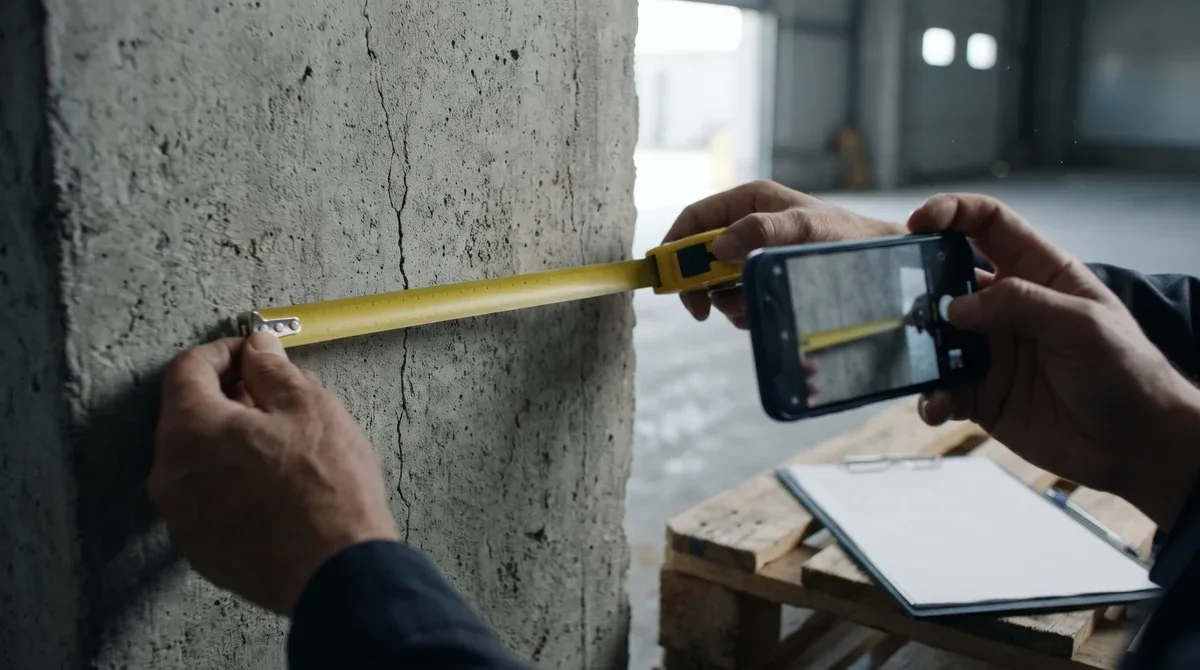
A handover report (in Uzbekistan usually called a transfer and acceptance act) records the condition of the premises at handover. It is attached to the lease and signed by both sides. At move-out, the deposit dispute is decided on the basis of this document.
What to include:
- cracks, damp patches, broken glass, condition of doors and locks;
- meter readings with photos;
- the number of keys handed over;
- a list of equipment left in place, such as air conditioners or shelving;
- dated photos or video of every room and wall.
Do the same report at move-out. Comparing the two makes it easy to separate damage you caused from normal wear and tear.
Registration, notaries and tax
A lease is made in writing. On top of that, leases are registered with the tax authorities through the tax service's E-ijara system (ijara.soliq.uz). The landlord enters the details, and the tenant logs in with an electronic signature and confirms them. Only then is the lease treated as registered. According to tax guidance, this should be done within 10 days of the lease taking effect. If the rent changes, an additional agreement is entered in the same system and applies once the tenant confirms it.
Be careful with assumptions about notarisation. Official guidance for residential leases says notarisation is not required. Rules for non-residential premises, long terms or state-owned property may differ. In December 2025 a draft new version of the Law "On Lease" was put up for public discussion, with entry into force planned for 1 January 2027. Among other things, it proposes allowing rent changes no more than once a year and requiring state registration of real estate leases of a year or longer, or with a legal entity as a party. It is still a draft, so check its status before you sign.
On tax: tax on rental income is calculated on an amount no lower than the result under the minimum lease rates. These rates are set by Law No. ZRU-1105 of 25 December 2025 and depend on a regional coefficient. If the contract rent is below that figure, tax is based on the minimum rate. If your company rents from an individual, it acts as tax agent: it withholds 12% of that base and pays it to the budget. Work out this amount with your accountant before signing.
If you run a business that rents out equipment or inventory yourself, tracking bookings, deposits and payments is covered in software for rental businesses.
Pre-signing checklist
- ☐ Rent, due date and currency are stated precisely.
- ☐ Rent review: how often, within what cap, with how much notice.
- ☐ Deposit amount, grounds for deductions and return deadline.
- ☐ Utilities and common areas: who pays and how it is calculated.
- ☐ Who is responsible for structural and routine repairs.
- ☐ Written consent for fit-out and compensation for fixed improvements.
- ☐ Length and terms of any rent-free period.
- ☐ Early exit terms for both sides and notice periods.
- ☐ Subletting conditions.
- ☐ Renewal right and formula for the new rent.
- ☐ Handover report with photos.
- ☐ E-ijara registration (within 10 days) and the tax question agreed with your accountant.
- ☐ Landlord's title or the signatory's authority verified.
Conclusion
In a commercial lease, money is lost to blank clauses rather than to the headline rent. Agree the rent review procedure, who keeps the fit-out and how you can exit. Record the condition of the premises on day one with photos. Register the lease in the system and settle the tax question with your accountant.
Then the call in month eight becomes a discussion about a specific clause, not a dispute.
This article is not legal advice. Laws change: have the lease checked against the current version of the law by a local lawyer before you sign.
Frequently asked questions
Can a landlord in Uzbekistan raise the rent whenever they like?
If the lease sets a procedure, only under that procedure. So agree upfront when, by how much and with what notice the rent can change: for example, no more than once a year, with a fixed percentage cap and at least 60 days' written notice. A lease without such a clause leaves you exposed in a dispute.
Does a commercial lease need to be notarised?
Official guidance for residential leases states that notarisation is not required. For non-residential premises, long-term leases or state-owned property, form and registration rules may differ. Check the current text on lex.uz or with a local lawyer before signing.
Who registers the lease in the E-ijara system?
In the tax service's ijara.soliq.uz system, the landlord enters the lease details and the tenant confirms them. According to tax guidance, this is done within 10 days of the lease taking effect. If the rent changes, an additional agreement is entered in the same system and applies once the tenant confirms it.
Can we recover fit-out costs when we leave?
It depends on the type of improvement and on the lease. Removable items such as shelving or air conditioners usually stay yours. Compensation for work built into walls, floors and utilities depends on the landlord's written consent and the lease terms. Get that consent before work starts.
Reviewing a lease for your first site in Uzbekistan?
Let's go through the cost, term and exit terms of your shop, office or warehouse lease from an operational point of view and prepare a list of questions to discuss with your local lawyer.