

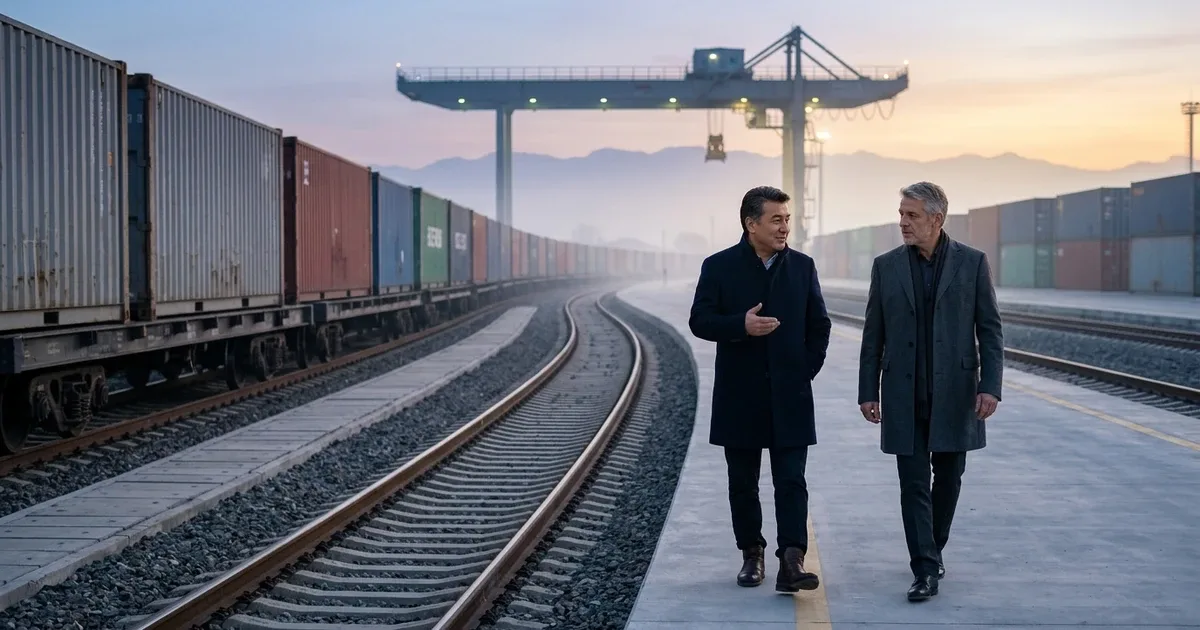
Information as of November 2026.
Your first order from a buyer in Uzbekistan has just been confirmed. The buyer in Tashkent wants the goods in six weeks. Your logistics team opens a map and goes quiet: no coastline, no neighbour with ocean access either, and five land borders to choose from. Which route is fastest? Which one is reliable? And who clears the goods on arrival?
This guide answers those questions in plain terms. You will see the main routes side by side, what really drives cost and time, the customs basics and how to choose a forwarder. It belongs to the series on doing business in Uzbekistan, written for executives who need to make a decision, not run a freight desk.
Why "double-landlocked" matters less than you think
Uzbekistan is one of only two double-landlocked countries in the world. To reach any ocean, cargo must cross at least two other countries. That sounds like a deal-breaker, but in practice the country runs on rail and road.
The numbers show a working system. Public railways carried 107.9 million tonnes of cargo in 2025, 5.1% more than in 2024 (National Statistics Committee, February 2026). Transit cargo through Uzbekistan reached 15.3 million tonnes in 2025, 54% more than in 2021 (president.uz, July 2026). The railway network is about 4,700 km long (president.uz, July 2026).
There is still a gap to close. In the World Bank Logistics Performance Index 2023, Uzbekistan ranked 88th, up from 129th in 2014 (World Bank, 2023). The government counts 27 logistics centres meeting international standards, but only one in the top category. Class A automated warehouses cover only 10–15% of demand (president.uz, July 2026).
So what does this mean for you? Routes exist, but quality warehousing and predictable timing still take planning.
The main routes compared
Think of Uzbekistan as a hub with five doors. Each suits a different origin and cargo type.
Also read Product Certification in Uzbekistan: Which Goods Need What, Recognition of Foreign Certificates and Digital Marking- Rail via Kazakhstan (and Russia) — Typical origin: China, Russia, Europe via the northern route; Mode: Rail, containers or wagons; Strengths: High volume, established; Watch out for: Transshipment at gauge change on the China border; congestion at peaks
- China–Kyrgyzstan–Uzbekistan — Typical origin: Western China; Mode: Truck today, rail later; Strengths: Short distance from Kashgar; Watch out for: Mountain passes, weather, the new railway is still under construction
- Middle Corridor (Trans-Caspian) — Typical origin: Turkey, Georgia, EU; Mode: Rail and truck plus Caspian ferry via Baku to Aktau or Turkmenbashi; Strengths: Bypasses the northern route; Watch out for: Several handovers, ferry schedules, more paperwork
- South via Termez — Typical origin: Afghanistan, Pakistan, India; Mode: Rail and truck; Strengths: Gateway to South Asia; Watch out for: Security and banking checks, limited onward capacity
- Air via Tashkent or Navoi — Typical origin: Anywhere; Mode: Air cargo; Strengths: Speed for urgent or high-value goods; Watch out for: Cost per kg, capacity on smaller routes
The China route deserves a closer look. Construction of the China–Kyrgyzstan–Uzbekistan railway, from Kashgar to Andijan, was launched in December 2024. It is designed for up to 15 million tonnes a year once completed (Times of Central Asia, December 2024). In November 2025 Kyrgyzstan's transport minister said completion was expected within about five years (Kun.uz). In September 2026 the first tunnel on the Kyrgyz section was holed through, with 27 tunnels under construction (CGTN). For now, plan around Kazakhstan rail or Kyrgyz trucking.
The Middle Corridor links Central Asia to Turkey and Europe across the Caspian Sea. A World Bank study found that reforms and investment could halve travel time on the corridor by 2030 (World Bank, November 2023). Today it works, but each handover between rail, port and ferry adds risk to your schedule.
Air cargo goes mainly through Tashkent and Navoi. A 2026 presidential decree on Navoi airport plans a new 16,000 m² cargo terminal and a target of 45,000 tonnes of cargo a year by 2030 (Kun.uz, February 2026).

What really drives cost and transit time
Freight quotes change weekly, so this guide does not quote prices. Instead, check these drivers before you compare offers:
- Number of handovers. Every change of mode, gauge or carrier adds days and damage risk.
- Border crossings. Each border means documents, queues and possible inspections.
- Season. Winter weather affects mountain passes and the Caspian ferries. Pre-holiday peaks fill trains and trucks.
- Empty return. Uzbekistan imports more than it exports, so equipment often travels back empty. That cost sits in your price.
- Cargo profile. Dangerous goods, temperature control and oversize cargo narrow your options.
- Documents. A missing certificate stops goods at the border. Waiting costs money every day.
One quiet driver is TIR. TIR is a UN customs transit system: a sealed truck crosses borders under one guarantee document, the TIR carnet, with fewer checks on the way. In 2025 Uzbekistan was the world's top issuer of TIR carnets for the third year running (IRU, June 2026). If your carrier works under TIR, ask how they handle transit borders.
Customs basics before the first shipment
You do not need to become a customs expert. But three facts shape every plan.
Who is the importer? The declarant is an Uzbek legal entity or entrepreneur. A foreign company without a local entity normally cannot clear goods itself. Decide early whether your subsidiary, distributor or buyer will be importer of record.
How long does it take? The Customs Code gives customs one working day from acceptance of a complete declaration. Checks by other agencies do not count in that day (Customs Code, art. 248). Delays usually start earlier: a wrong HS code, a missing certificate or late documents.
What do you pay? Import duty depends on the HS code and origin, and VAT is 12% on customs value plus duty and excise (Tax Code). Uzbekistan is an observer to the Eurasian Economic Union, not a member, so goods from Russia or Kazakhstan still cross a full customs border. The full process is in the guide to import and customs clearance in Uzbekistan.
Customs is electronic. Declarations are filed online, and carriers send preliminary information that customs uses for risk checks. For zones with customs benefits, see free economic zones and investor incentives.

A real-life scenario: the six-week order
Here is an illustration, not a real case. A Turkish furniture maker sells 40 m³ of goods to a retailer in Tashkent. The sales team promises six weeks.
The forwarder offers two options: a truck under TIR through Georgia and the Caspian, or rail via the northern route. Truck looks faster on paper. But the ferry schedule is irregular in winter, and the retailer's certificate of conformity is not ready. The goods wait at the border for ten days while documents are fixed.
What would have helped? A route plan with a buffer for the ferry, certificates prepared before shipping, and an importer of record confirmed in advance. None of this is about freight rates. It is about preparation.
How to choose a forwarder
A good forwarder in Uzbekistan solves border problems before they happen. Ask these questions:
- Which routes do you run every week, not just occasionally?
- Do you have your own staff or partners at the key borders?
- Can you work under TIR and provide tracking?
- Who acts as customs broker, and is that broker licensed?
- What happens if goods are held: who pays storage and demurrage?
- Can you give references from clients with similar cargo?
Check the contract carefully. Responsibility for delays, insurance and handovers should be in writing. Agree Incoterms together with your buyer, because freight and insurance to the border are part of the customs value. If you need local storage after arrival, see how fulfilment and warehouse outsourcing works.
How it differs from home
- Sea freight to a nearby port — In Uzbekistan…: Every route crosses at least two countries by land, often with a gauge or mode change
- Customs union with neighbours (EU, EAEU) — In Uzbekistan…: Full customs border with every neighbour, including Kazakhstan and Russia
- Plenty of Class A warehouse space — In Uzbekistan…: Modern warehousing is limited: Class A covers 10–15% of demand (president.uz, 2026)
- Clearing goods as a foreign seller — In Uzbekistan…: Clearance normally needs a local importer of record
- Stable lead times — In Uzbekistan…: Seasonality and border queues make buffers essential
Have you built buffers like these into your own delivery promises? Most first-time exporters to Central Asia underestimate them.
Common mistakes
- Promising a delivery date before the route and documents are confirmed.
- Choosing the cheapest quote without asking about handovers.
- Shipping before certificates and HS codes are checked.
- Forgetting the return leg: who pays for empty equipment.
- Treating transit and export the same. Goods leaving Uzbekistan have their own rules; see exporting from Uzbekistan.
Conclusion
Uzbekistan is double-landlocked, but it is not cut off. Rail through Kazakhstan, trucking under TIR, the Middle Corridor, the southern route via Termez and air cargo all work today. The China–Kyrgyzstan–Uzbekistan railway may change the map, but it is not open yet. Pick your route by origin, cargo type and tolerance for delay. Then fix the importer of record, documents and buffers before the first truck leaves.
This article is general information, not legal, tax or customs advice. Rules, rates and procedures change often: check the current texts on lex.uz and customs.uz and confirm your case with a licensed customs broker and adviser.
Frequently asked questions
What is the main way goods reach Uzbekistan?
Rail and road. Public railways carried 107.9 million tonnes of cargo in 2025, up 5.1% (National Statistics Committee). International trucking under TIR is also widely used: IRU reports that Uzbekistan was the world's top issuer of TIR carnets in 2025, for the third year running (IRU, June 2026). Air cargo serves urgent and high-value goods.
Is the China–Kyrgyzstan–Uzbekistan railway open?
Not yet. Construction of the Kashgar–Andijan line was launched in December 2024 (Times of Central Asia). In November 2025 Kyrgyzstan's transport minister said completion was expected within about five years (Kun.uz), and the first tunnel on the Kyrgyz section was holed through in September 2026 (CGTN). Today China cargo goes via Kazakhstan by rail or via Kyrgyzstan by truck.
How long does customs clearance take in Uzbekistan?
The Customs Code gives customs one working day from acceptance of the declaration with all documents; checks by other agencies are not counted in that day (Customs Code, art. 248). In practice delays usually come from missing certificates, permits or wrong HS codes, not from the clearance step itself.
Can a foreign company clear goods in Uzbekistan without a local entity?
Usually not as the importer of record. The declarant is an Uzbek legal entity or entrepreneur, such as your subsidiary, distributor or buyer, often working with a licensed customs broker. Agree early who will be the importer and who pays duties and VAT.
Planning your first shipments to Uzbekistan?
A short call can help you compare routes, Incoterms and the local importer setup against your own volumes and deadlines, before you sign with a forwarder. Free and with no obligation.


