Under OSAGO (compulsory motor third-party liability insurance in Uzbekistan), the payout goes to the injured party, not the driver at fault. The injured party files a written claim with the at-fault driver's insurer (or, under direct settlement, with their own insurer). By law the insurer must decide within 15 days of the claim and pay within 5 working days of a positive decision. The at-fault driver must notify their insurer within 72 hours. Below are all the steps from the scene to court, each deadline tied to an article of the law.
What OSAGO covers and how much it pays
OSAGO insures the vehicle owner's civil liability. It compensates harm the at-fault driver causes to other people: their life, health and property. The at-fault driver's own car is not covered (Law ZRU-155, Article 8).
Since 2026 the insured sum is 80,000,000 so'm. Under Article 22 of the law:
- Harm to life and health: up to 65% of the sum, i.e. 52 million so'm;
- Harm to property: up to 35%, i.e. 28 million so'm.
If several people are harmed, the limit is shared in proportion to the harm each suffered. Court costs and fines are not covered.
Step 1. What to do at the scene
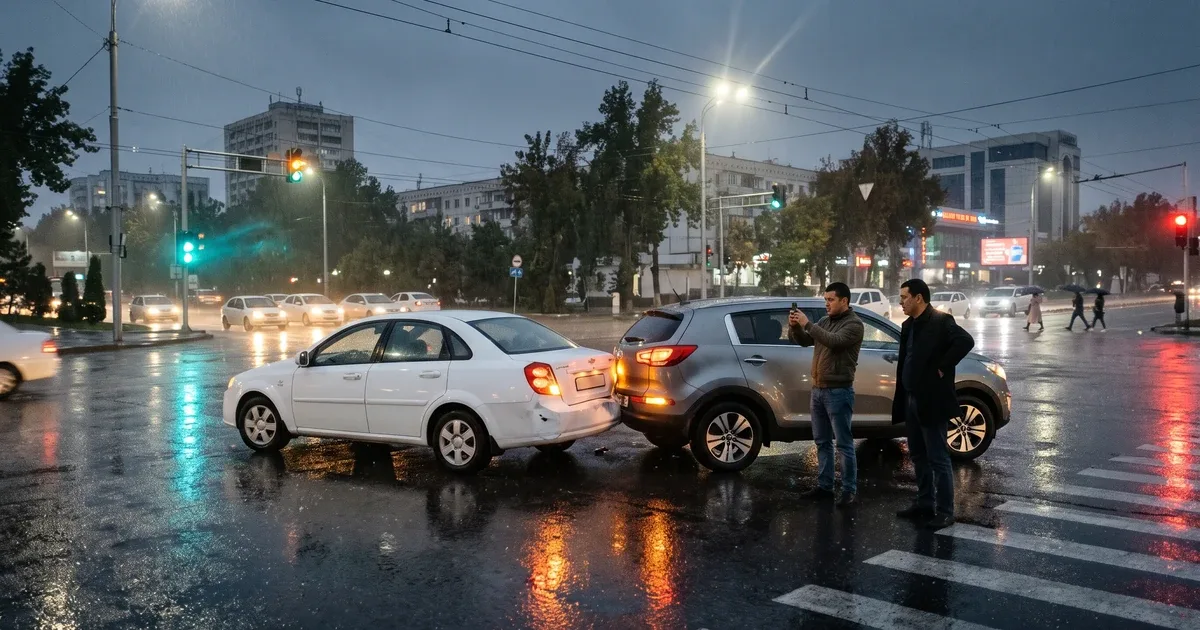
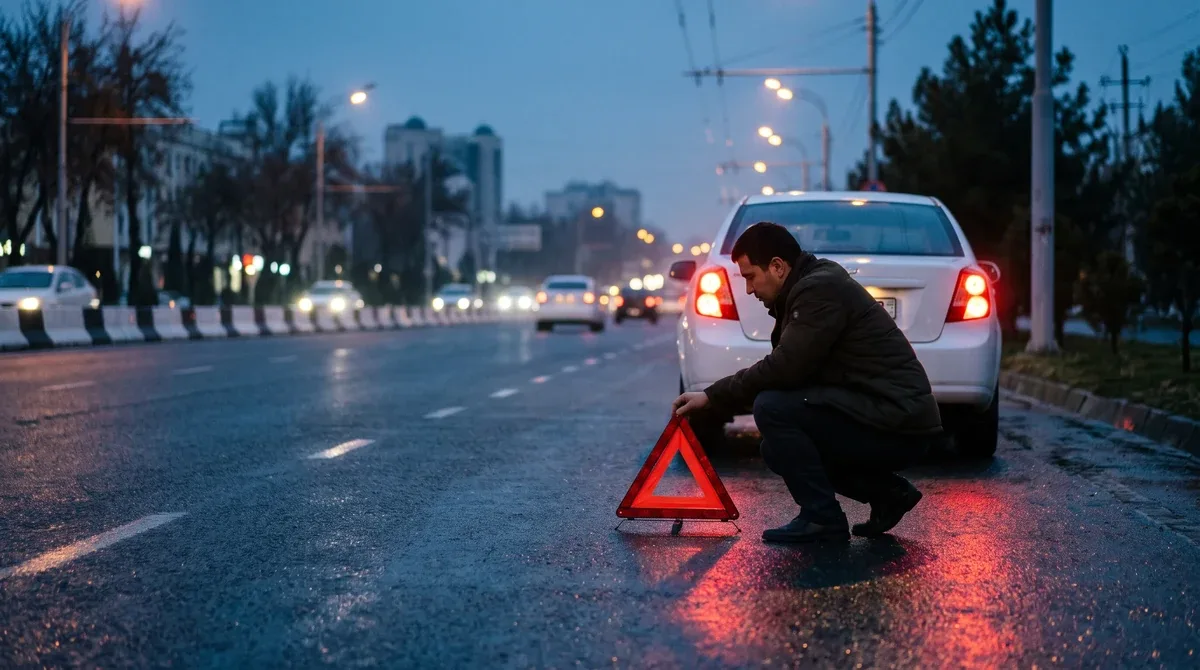
- Take steps to limit the damage and help anyone injured. The law says such actions can never be a reason for the insurer to refuse (Articles 19 and 23).
- Exchange policy details. The at-fault driver must give other participants the details of their OSAGO contract on request (Article 19).
- Wait for the traffic police and, if possible, write down witnesses' names and addresses (OSAGO Rules approved by Cabinet Resolution No. 141, para. 34).
- Take photos of the collision spot, the vehicles and damaged parts without moving anything.
Settling without the police (accident notice)
In some cases drivers can fill in an accident notice themselves. All conditions of Article 20¹ must be met at once: nobody is injured and no other property is damaged; only two vehicles collided; no pedestrian was involved; one driver fully admits fault; both drivers were insured before the accident; their documents are valid; nobody is intoxicated; and there is no dispute over the list of damage. If any condition is missing, the notice is invalid.
Lesen Sie auch OSAGO 2026: the new tariff and how the price is calculatedThe notice is filled in on the spot in two copies and sent to the insurers within 3 working days with photos or video, an intoxication test report (taken within 4 hours of drawing up the notice), and copies of licences, registration certificates and policies. It can also be sent through the insurer's mobile app (Article 20²). Under this procedure the damage to the car cannot exceed 28 million so'm.
Step 2. Notifying the insurer: deadlines
Key deadlines for the at-fault (insured) driver:
- 3 calendar days to hand the injured party a copy of the policy (Law, Article 19; Rules, para. 34);
- 72 hours to notify the insurer and the traffic police in writing or electronically, with a policy copy (Rules, para. 34; Article 19 of the law says "immediately");
- 3 working days to submit the accident notice with documents, if one was drawn up (Article 19).
Note: if the at-fault driver submits the notice late without good reason or skips the intoxication test within 4 hours, the injured party is still paid, but the insurer may later recover the amount from the at-fault driver (Article 24).
Step 3. Documents the injured party submits
The injured party sends the insurer or its branch a written claim with originals or copies of (Article 19 of the law, para. 37 of the Rules):
- the insurance policy (if available);
- the accident report or ruling, and a medical certificate if there is harm to health;
- documents proving property damage: valuation report, payment documents, repair and service contracts;
- an identity document;
- inheritance or succession documents if an heir is claiming.
If you also hold an OSAGO policy, you may use direct settlement: claim from your own insurer, which then recovers the cost from the at-fault driver's insurer (Article 20; Rules, para. 38).
Step 4. Inspection and appraisal
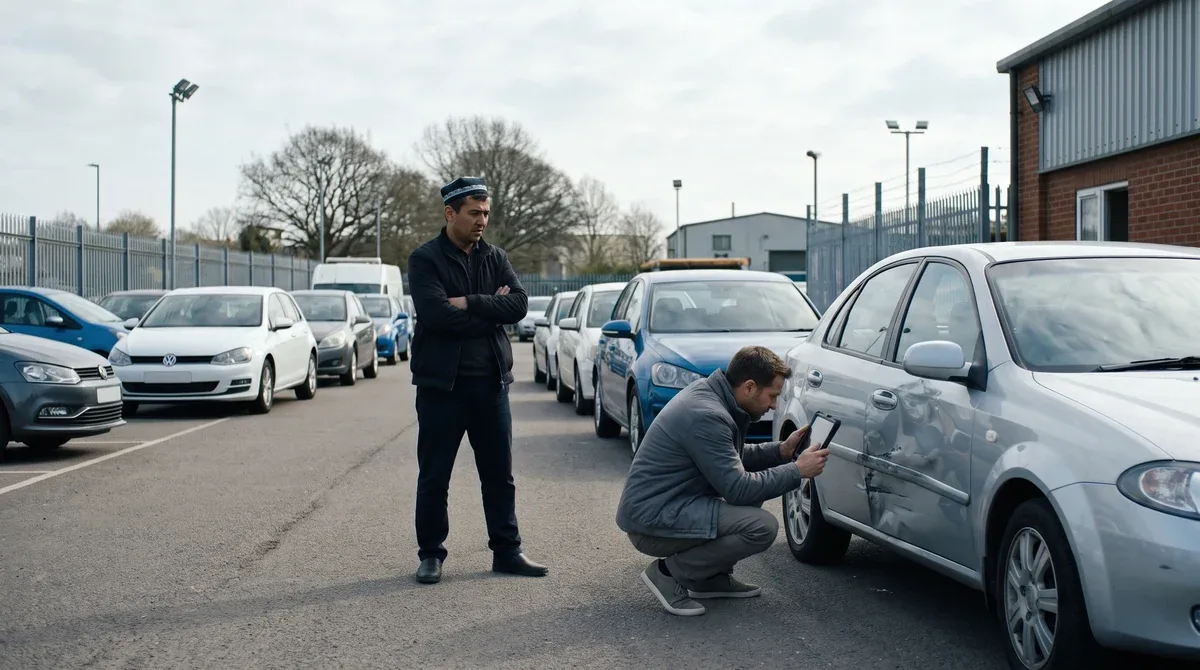
The injured party must make the damaged property available for inspection. The insurer must inspect it and arrange an independent appraisal within 5 working days of the written claim (Article 21). If the car cannot be driven, the inspection takes place where it is.
If the insurer misses this deadline, you may order an independent appraisal yourself, and the insurer may not dispute its results. The cost of the appraisal used for the payout is added to the loss (Article 21).
Do not rush the repair. You may not repair or scrap the car without the insurer's written consent or before its decision (Article 20²). Repairs before inspection that make it impossible to confirm the event and the loss are a lawful ground for refusal (Article 21).
Step 5. Decision and payout deadlines
- 15 days after the claim for a decision to pay or refuse (Article 23; Rules, para. 67). For an accident notice: 15 calendar days from submission of the documents (Article 20²).
- 5 working days to pay after a positive decision (Article 23; Rules, para. 66).
- Late-payment penalty based on the Central Bank's main rate if the insurer pays late (Article 23).
- 3 years after the contract expires to bring a claim for an event that happened while it was in force (Article 23).
Before the loss is fully assessed, you can ask for a partial payment. By agreement, the insurer may arrange and pay for repairs instead of paying cash (Article 23).
When the insurer may refuse
Under Article 8 of the law, the following are not insured events:
- harm caused while using a vehicle not named in the policy;
- moral damage and lost profit;
- harm during competitions, tests or training drives at designated sites;
- damage the driver causes to their own vehicle, trailer and cargo;
- harm during loading or unloading, or while driving on the owner company's own premises;
- damage to valuables, cash or antiques;
- intentional acts of the injured party aimed at causing the insured event.
Another ground is repair before inspection (Article 21). By contrast, the at-fault driver being drunk, unlicensed or not listed on the policy does not deprive the injured party of payment: the insurer pays, then seeks recovery from the at-fault driver (Article 24).
A refusal must state its reasons (Article 23). If, when reviewing an accident notice, the insurer switches the at-fault party without video, inspection or appraisal evidence, the law treats this as an unjustified refusal (Article 20¹).
What to do if your claim is refused
- Written complaint to the insurer. Ask for the reasoned decision, attach any additional documents and request a review. Keep a copy stamped as received.
- Appeal to NAPP. The National Agency of Perspective Projects regulates the insurance market. You can file an appeal online and track its status at napp.uz/ru/appeal. Attach the insurer's decision, your claim and documents.
- Court. OSAGO disputes are resolved in the manner set by law (Article 38). The window to sue is 3 years after the contract expires (Article 23).
If the at-fault driver is unknown, uninsured, or the insurer is insolvent, the Payment Guarantee Fund pays instead. The claim is filed within 3 years of the harm; the fund decides within a month and pays within a week (Articles 25–26).
Statistics: how often claims are refused
According to NAPP, in January–June 2026 general insurers (all lines, not only OSAGO) received 137,727 claims. Of these, 93.7% were paid and 2.5% refused; the rest were still being processed. Figures vary noticeably between companies; you can compare them in the insurance market statistics and the insurer rating.
Bottom line
At the scene, take photos and wait for the police (or fill in an accident notice if every condition is met). The at-fault driver notifies their insurer within 72 hours; the injured party files a written claim with documents. The insurer inspects within 5 working days, decides within 15 days and pays within 5 working days. If refused: complain to the insurer, then NAPP, then court. You can check the policy price in advance with the OSAGO calculator — it is the same at every insurer.